
How to distinguish 6 pairs of plants that are easy to confuse with each other
Categories: Food and Drinks | Healthy lifestyle | Nature | World
PictolicWhen going for a walk in nature, it may be tempting to walk past a plant and pick its fruits. However, before you do this, make sure that you are not mistaken with edible plants and their "evil" counterparts, and instead of an appetizing pleasure, you will have problems with the gastrointestinal tract.
That's why we at Pictolic have put together a collection of edible plants and their toxic counterparts so you can always be sure you're picking the right plant.
6 PHOTOS
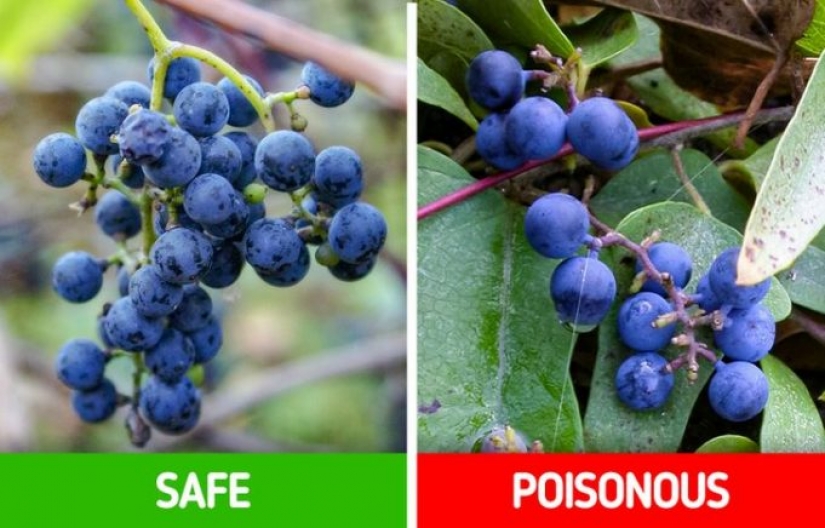
1. Wild Grape and Canadian Silver Seed.
How to tell them apart: Both of these plants grow in clusters and are very easy to confuse with each other. So, the best way to determine which one is edible is to take one grape-like berry and crack it open. Wild grapes (pictured left) have round seeds, while moonseed seeds (pictured right) are crescent-shaped.
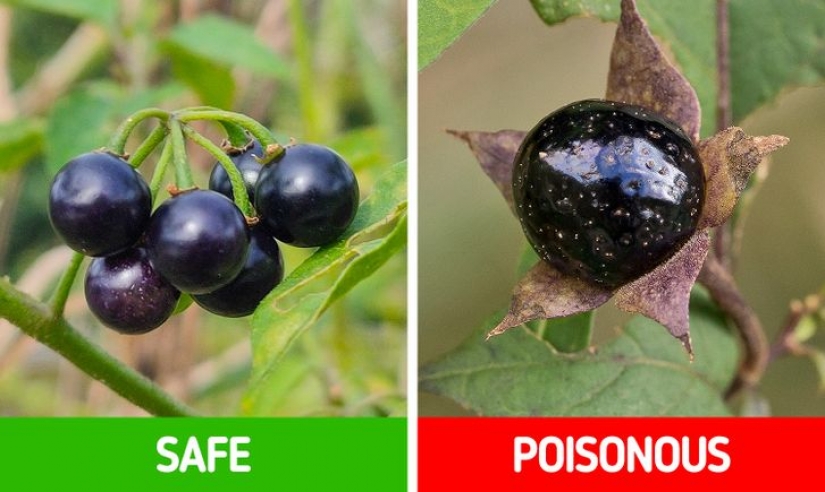
2. Black nightshade and belladonna.
How to tell them apart: Black nightshade berries (pictured left) grow in bunches and have white petals, while deadly belladonna berries (pictured right) grow individually. However, you need to be careful when picking black nightshades because they can be poisonous when unripe.
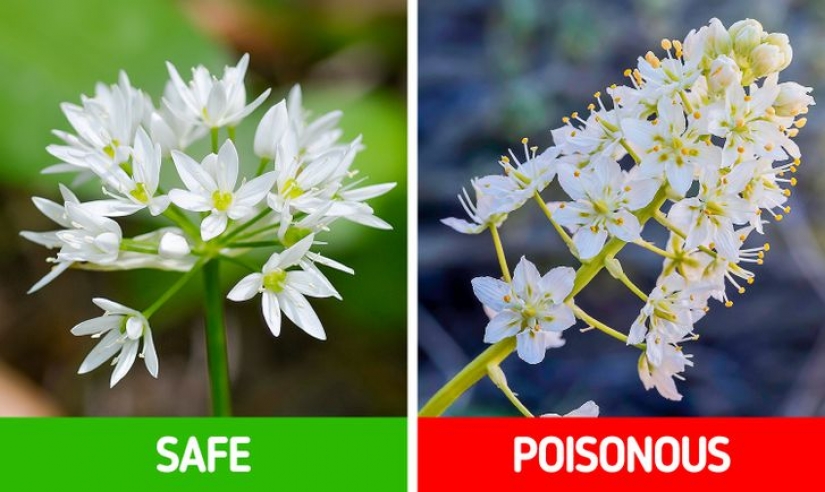
3. Ramson and Toxicoscordion venenosum.
How to tell them apart: The easiest way to tell the two plants apart is to use their olfactory receptors. Ramson (pictured on the left) has a specific smell that recognizes onions and garlic, while plants of Toxicoscordion venenosum (pictured on the right) will not have such a strong smell.
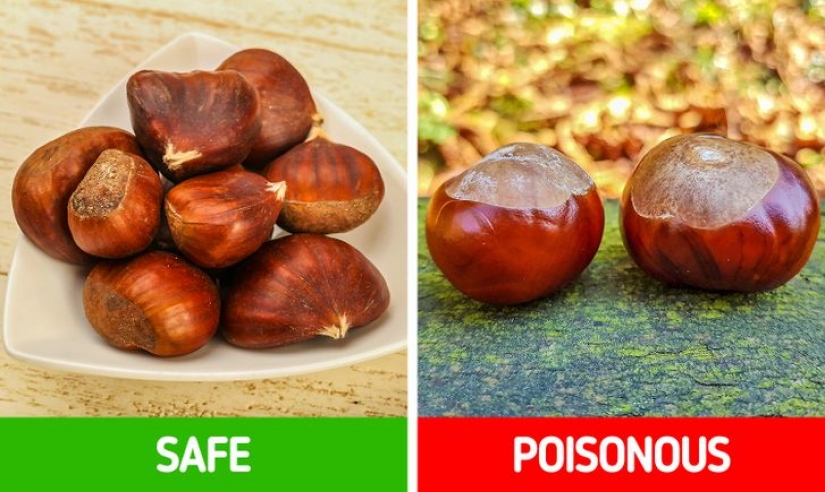
4. Chestnuts and duck chestnuts.
How to tell them apart: Edible chestnuts (pictured on the left) always have a sharp point or tassel on the nut. On the other hand, horse chestnuts (pictured on the right) do not have a tassel or point, they are smooth and rounded in shape.

5. Wild carrots and spotted hemlock.
How to tell them apart: Analyze their stems. Wild carrots (pictured on the left) usually have hairs, while the poisonous hemlock (pictured on the right) has a smooth stem with purple spots.
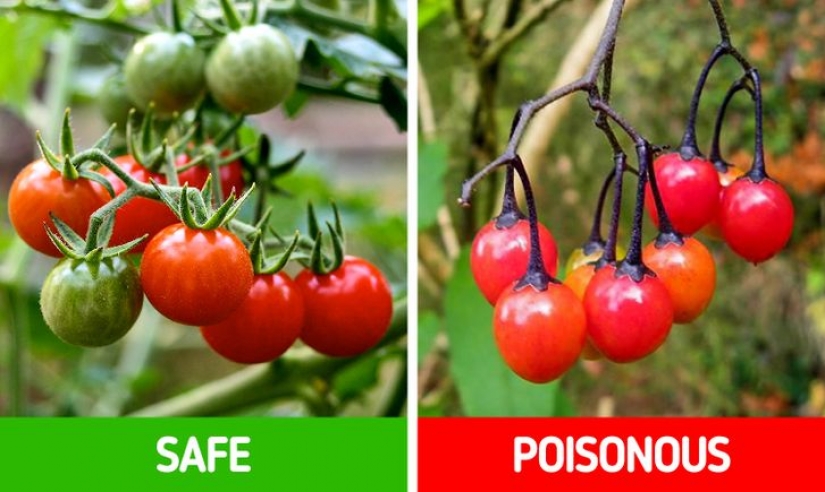
6. Currant tomato and nightshade bittersweet.
How to tell them apart: Both plants have flowers with 5 pointed petals, but different colors. The current tomato (pictured left) has yellow petals, while the nightshade (pictured right) has deep purple petals.
Keywords: Nature | Plant | Fruit | Food | Vegetables | Counterparts | Problem | Health | Healthy lifestyle
Recent articles

It's high time to admit that this whole hipster idea has gone too far. The concept has become so popular that even restaurants have ...

There is a perception that people only use 10% of their brain potential. But the heroes of our review, apparently, found a way to ...
Related articles

Yellowstone is the first national Park in the world and also the largest of all national parks in North America. For nearly 150 ...

Is it possible to laying wood to name a form of art? Turns out you can. Because in the world there are such people, which gently ...

For a person likely to get struck by lightning in any one year is a chance to 300 thousand. And although 90 percent of people ...
New Year's is a time to surprise and delight loved ones not only with gifts but also with a unique presentation of the holiday ...