
What's Hiding Behind Aokigahara: The Suicide Forest in the Heart of Japan
Categories: Asia | Culture | History | Nature | Society
By Pictolic https://www.pictolic.com/article/what39s-hiding-behind-aokigahara-the-suicide-forest-in-the-heart-of-japan.htmlAccording to the World Health Organization, about 800,000 people commit suicide every year in the world. Japan is among the top five countries with the highest number of suicides. People commit suicide for various reasons and choose different places to do so. But there are locations that seem to attract suicides like a magnet. In the US, such a place is the Golden Gate Bridge in San Francisco, and in Japan, it is the Aokigahara forest.
Translated from Japanese, Aokigahara means "sea of trees." And indeed, from the outside, this place resembles a sea. The trees here grow so close to each other that from above, the forest looks like a solid green carpet that sways in the gusts of wind. The forest is located along the northeastern slope of the sacred Mount Fuji, about 100 kilometers from Tokyo, and covers an area of 35 square kilometers.
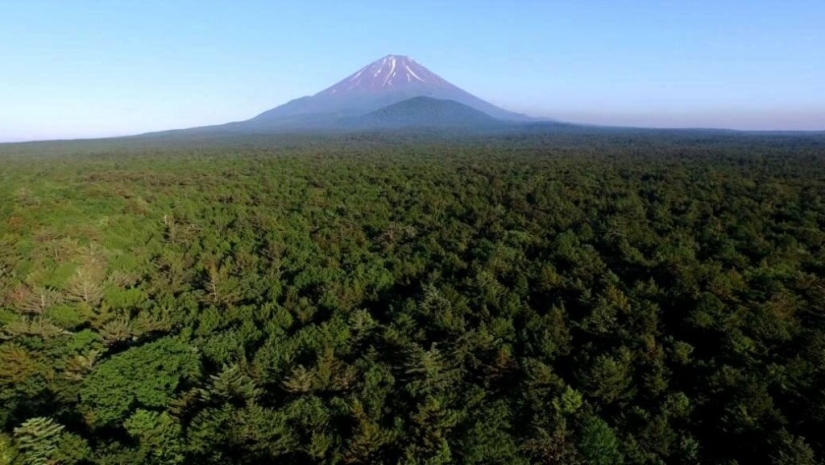
The forest has many powerful old trees and seems very ancient. But from a historical perspective, Aokigahara is a very young forest. It is "only" 1,200 years old, and it was once much larger. In 1707, Mount Fuji had its last major eruption. Lava covered vast areas at the foot of the mountain and on its slopes. For some unknown reason, only one slope, about 3,000 hectares in area, remained untouched.
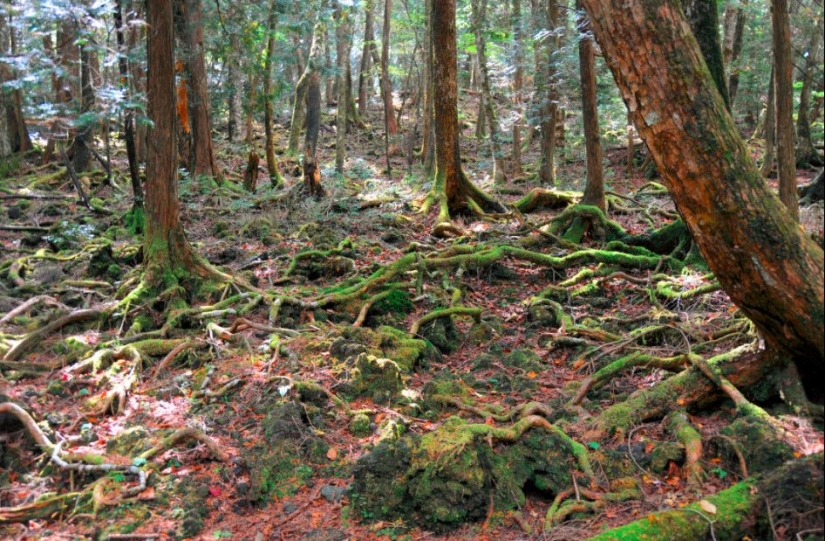
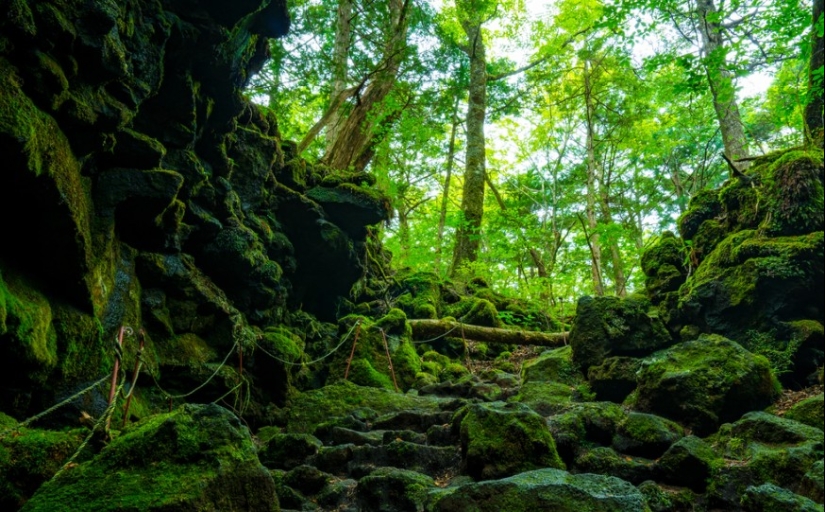
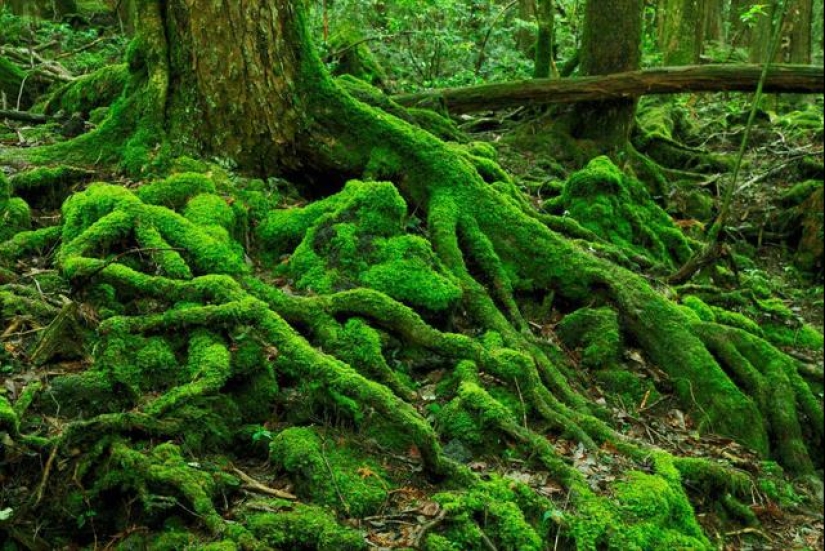
Now there are pine trees, boxwood and several other types of conifers growing there. The trees stand almost like a solid wall, so wind in the forest is a rarity. Aokigahara is always humid, and therefore the ground and rocks are covered with a thick carpet of moss and lichen. The fauna of the forest is not very rich: foxes, feral dogs, snakes, birds and insects live here.
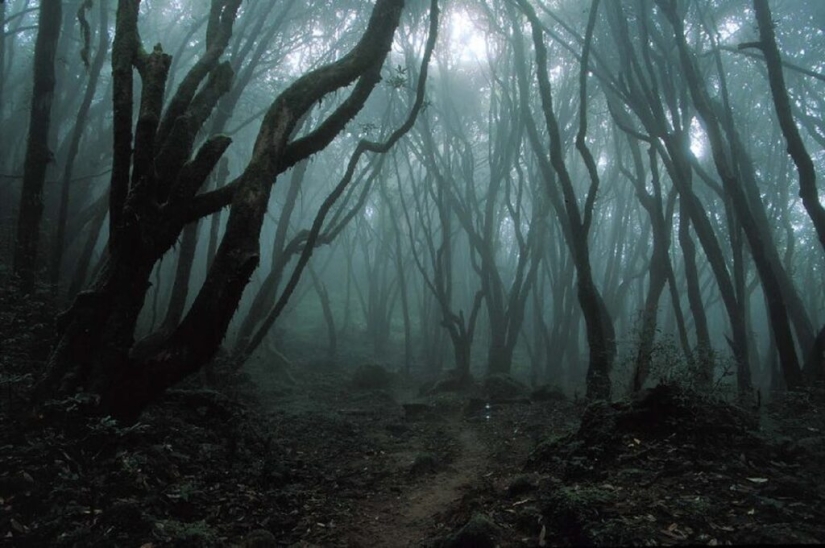
Aokigahara is a national park with several tourist routes. Tourists are attracted here by the atmosphere of dark mystery, as well as numerous caves and grottoes of volcanic origin. However, not everyone who comes to Aokigahara is interested in natural beauty. Unfortunately, some choose this place to commit suicide.
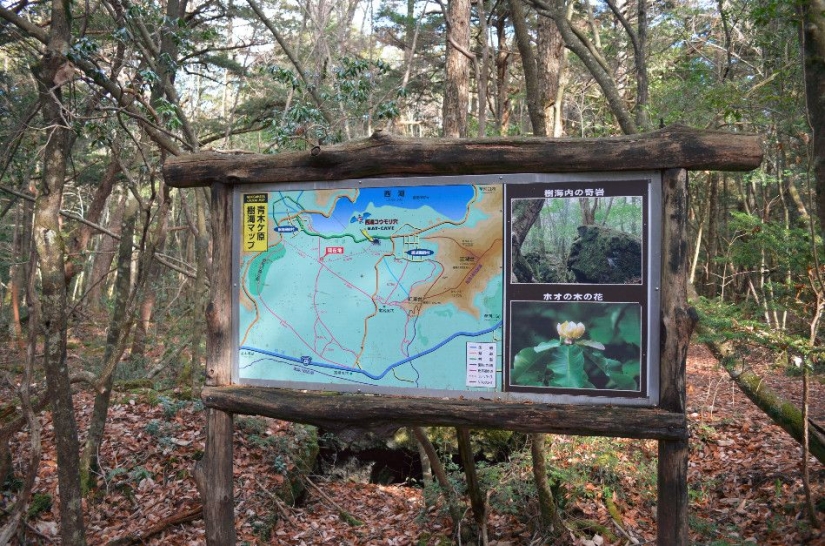
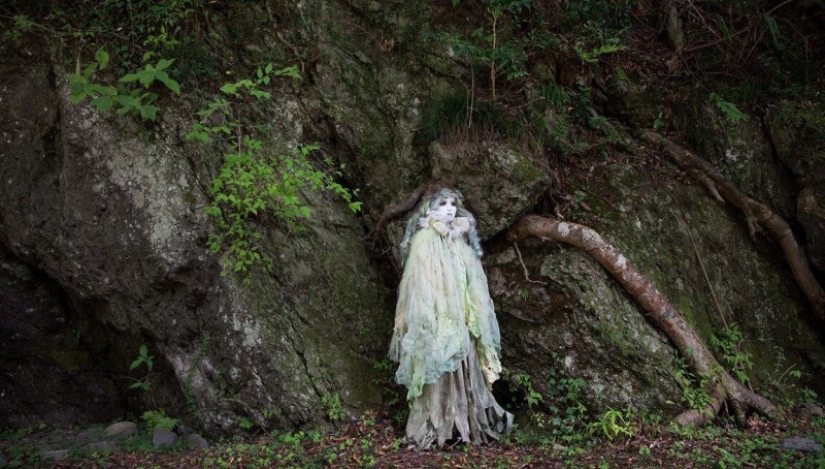
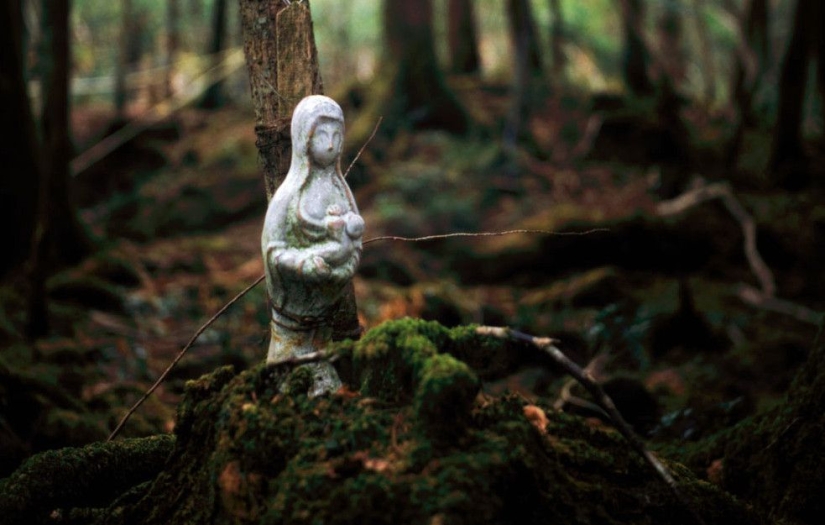
In Japanese mythology, Aokigahara has long been considered a home for spirits and demons. Locals believed that it was inhabited by yurei, the ghosts of people who died in a state of great emotional distress. These ancient beliefs laid the foundation for modern legends about the forest.
Aokigahara Forest is the most popular suicide spot in Japan. It is the second most common suicide spot in the world, behind only the Golden Gate Bridge in San Francisco. Every year, 70 to 100 bodies are found in the forest. But it is important to remember that many suicides specifically seek out secluded places and go deep into the forest, so not all bodies are found.
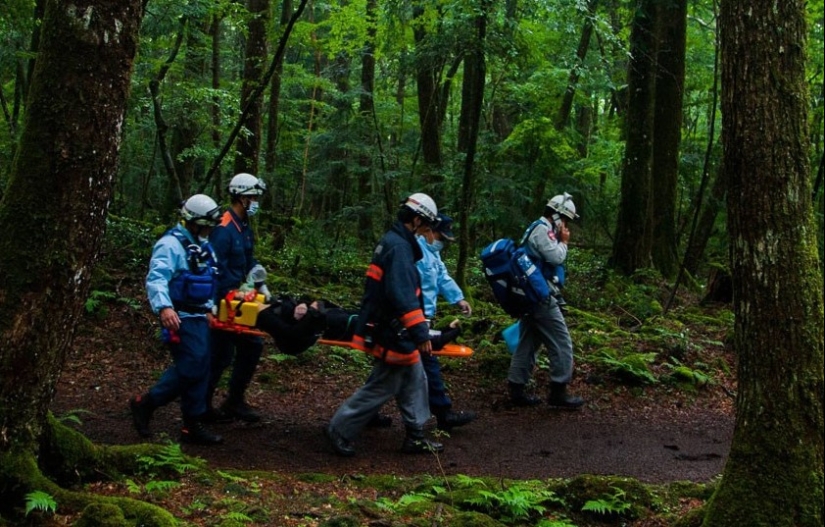
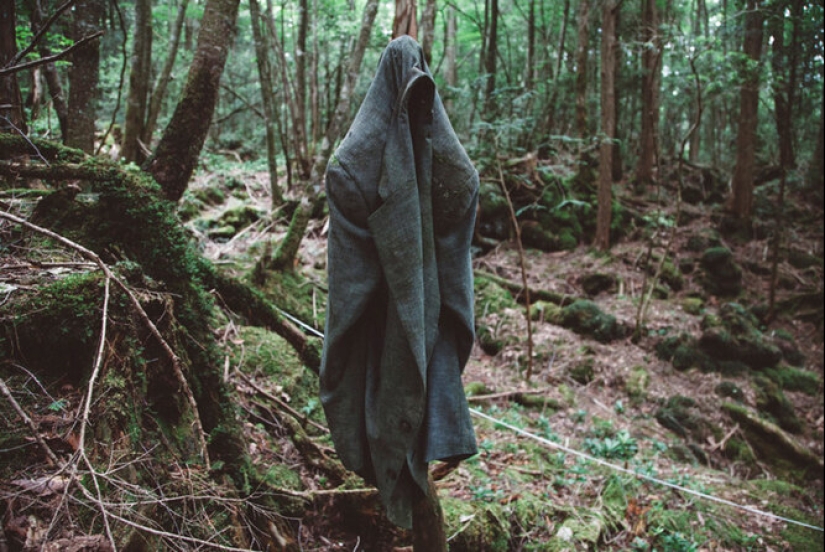
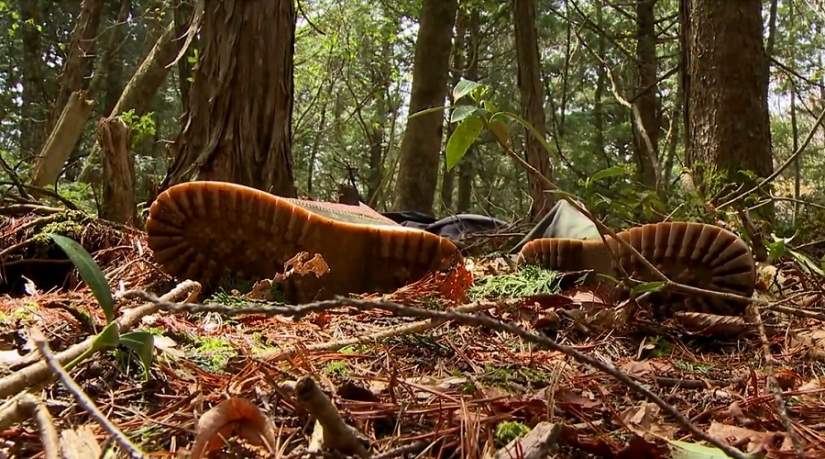
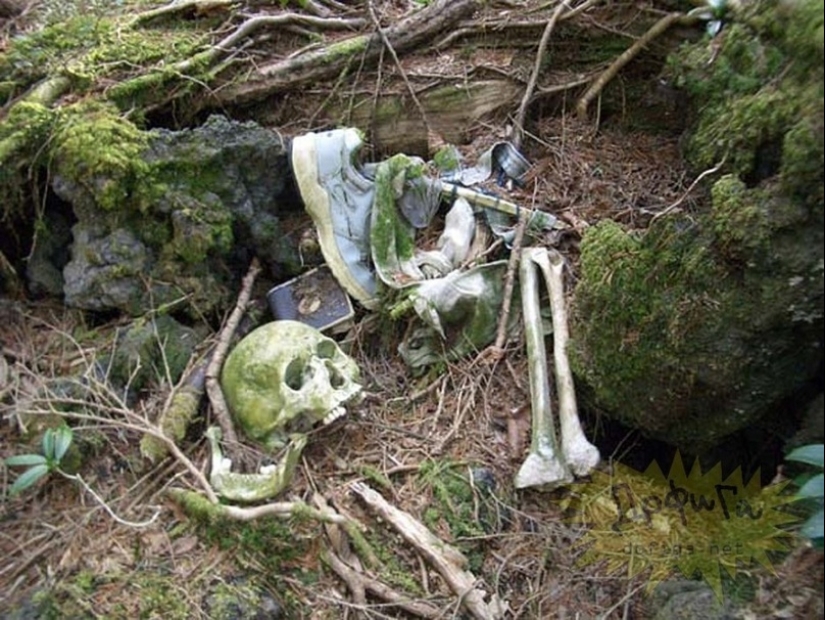
If you turn off the tourist route, you may stumble upon the remains of one of the suicides. The thickets still contain gruesome traces of the tragedies: scraps of rope on trees, personal belongings, medicine packaging, blades and much more. Officially, the police began regular searches for bodies in the forest in 1970.
Unfortunately, the statistics are not encouraging - the number of tragedies under the shade of the "Sea of Trees" is growing from year to year. The year 2002 was especially sad, when 78 bodies were found in Aokigahara. The responsibilities for the search, evacuation and burial of bodies are assigned to the authorities of the three nearest settlements. These are the village of Narusawa and the cities of Fujikawaguchiko and Kofu.
Every year, the authorities allocate about 5 million yen (approximately 2.65 million rubles) for these purposes. In populated areas, special premises for storing bodies have been equipped. In 2000, there were more than 200 corpses there, awaiting identification and burial. It is not surprising that local residents are unhappy with such obligations, but they cannot change the situation.
To prevent suicides, various methods are used. At the entrance to the forest, for many years, there has been a poster with the inscription in several languages:
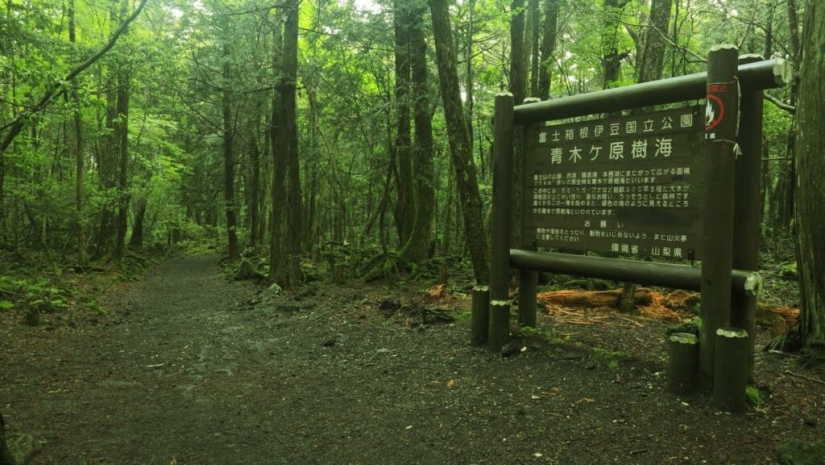
Below are the phone numbers for the police and the Helpline. In addition, video cameras have been installed at the entrance to the forest and along its paths. A special police team monitors forest visitors and, if they behave strangely, a patrol is immediately dispatched. According to the rules introduced by local authorities, the shops closest to the park do not sell ropes, knives, or pills that can be used for suicide.
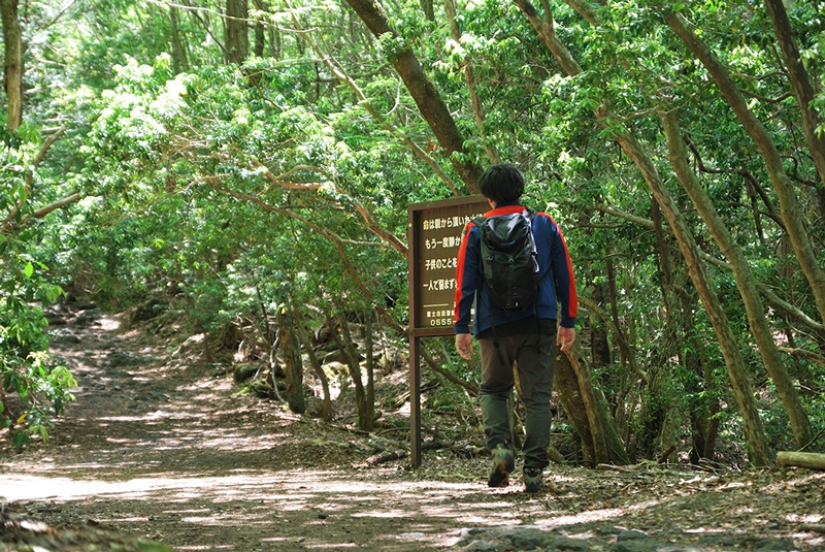
Employees of shops, parking lots and cafes undergo special training. They are able to recognize a potential suicide with a high degree of probability and try to prevent a tragedy. According to local residents, such people are given away by their behavior. They do not rush to enter the forest immediately, but wander aimlessly in front of the gates for some time, avoiding eye contact with other people.
Video cameras and the attentiveness of local residents save hundreds of lives. The owner of one of the local cafes told the Japan Times that over 30 years of work he saved 160 people from suicide. No fewer good deeds are on the account of other entrepreneurs and ordinary workers. It is scary to imagine how many people would have died in the forest if not for these modest heroes.
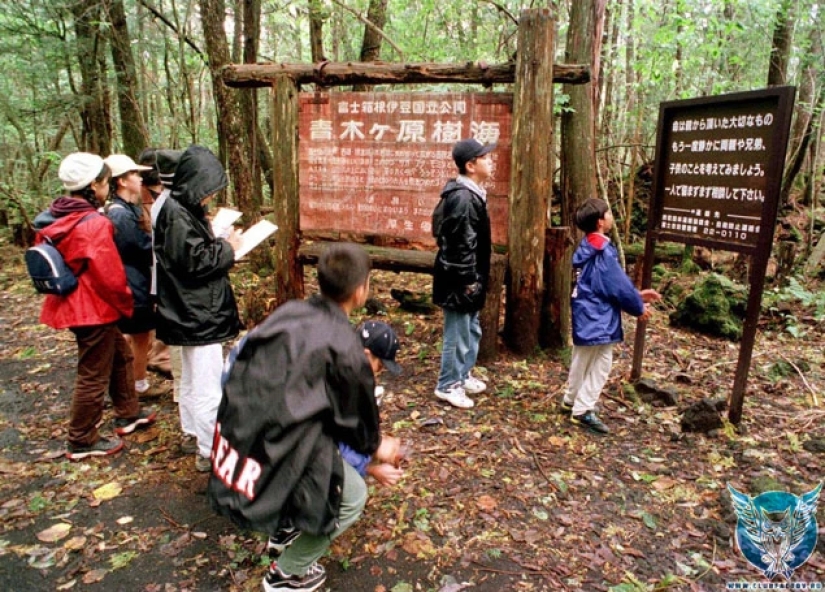
Whenever a suspicious person is seen in the vicinity of Aokigahara, it is customary to immediately call the police. Patrols are dispatched immediately to such calls, no matter how strange they may seem. Law enforcement officers and volunteers regularly patrol the forest. Men in formal office suits attract special attention - they are detained immediately.
Visitors to Aokigahara are strongly advised not to stray from the official routes. It is very easy to get lost, injured or even killed in the forest. Rocks, bush-covered grottoes and pits are dangerous even during the day. Even with a compass, it is not easy to get out of the forest - there are iron ore deposits underground that create magnetic anomalies. If a curious guest decides to leave the path, unusual and eerie discoveries await him.
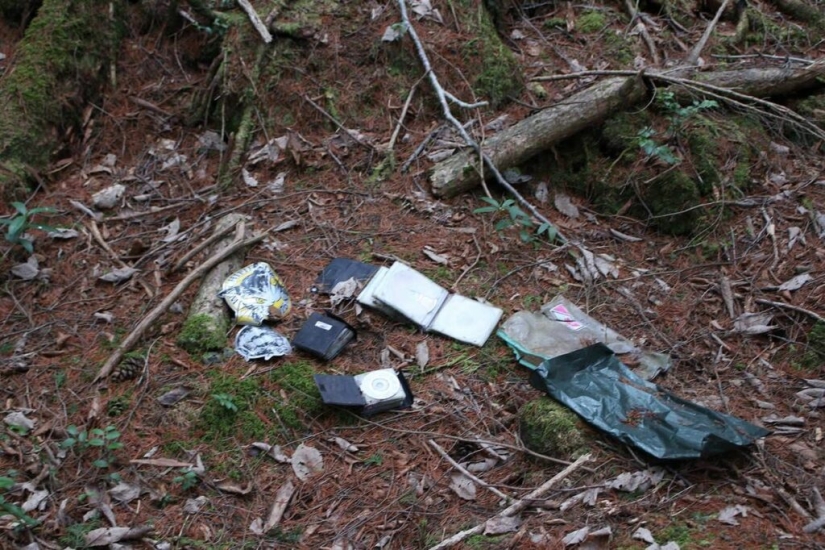
Yes, bodies are evacuated from Aokigahara, but some of them are not discovered right away. A decomposed corpse in a tree or a skull sticking out of the moss are not the kind of “sights” you want to see. However, death has become something familiar in this forest, and every visitor should remember that.
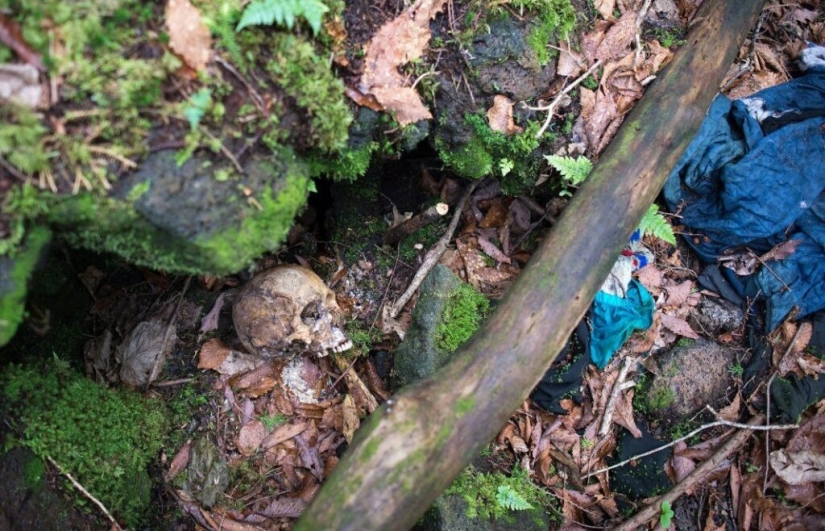
The police do not always take the deceased's belongings from the scene of a tragedy. Detectives are only interested in items that help establish the identity. Because of this, some parts of the forest resemble a gloomy museum of hopelessness and death. In the thicket, women's handbags, pieces of clothing, packaging from medicines, photographs and suicide notes are found.
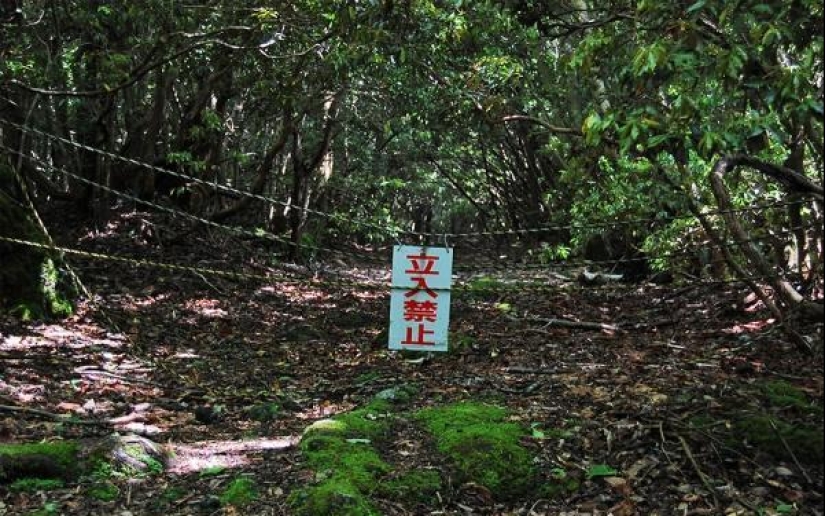
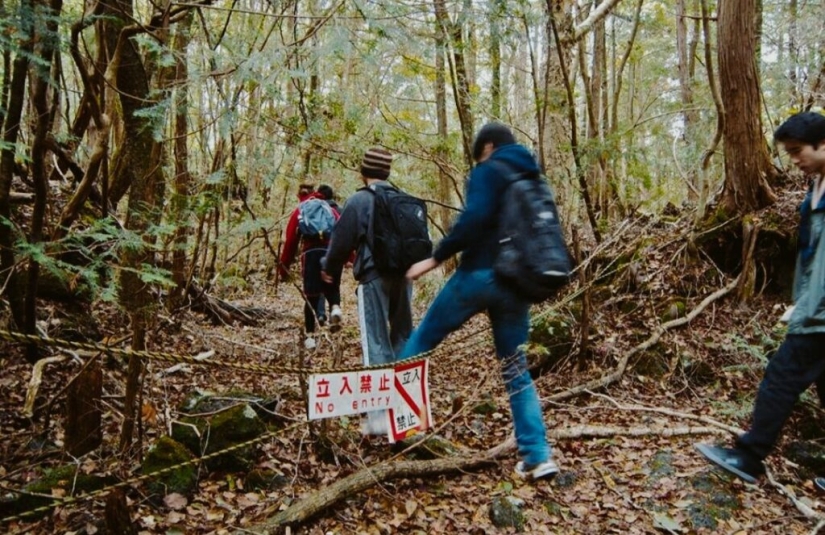
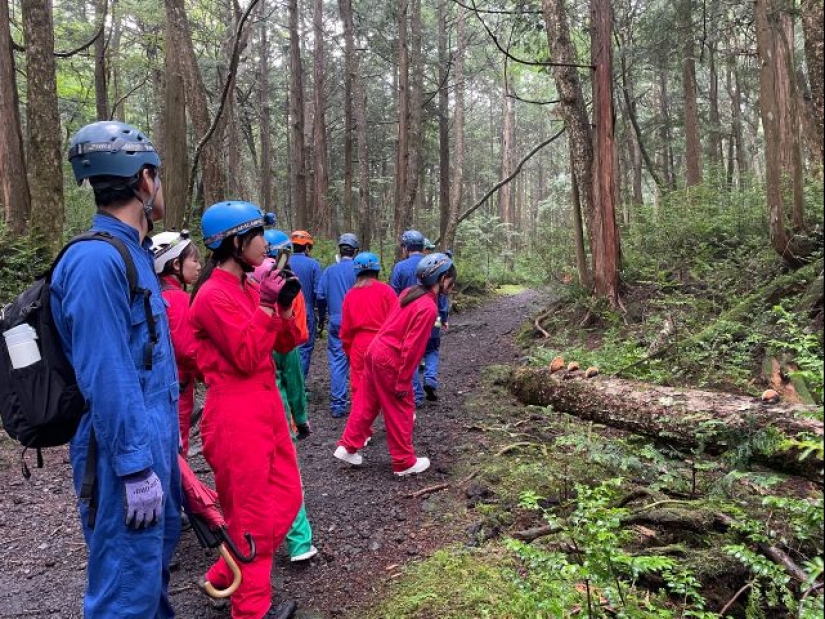
There are many areas in the forest that are fenced off with police tape. An inexperienced tourist might think that this is how they mark places of death. But this is not true. Once a year, about 300 police officers and volunteers comb the forest in search of corpses. They fence off the checked areas with tape so as not to get confused. After the raid, they simply do not remove it.
But why do people from all over Japan come to Aokigahara Forest to commit suicide? There are two versions of this. According to the first, suicides chose the "Sea of Trees" after the 1960 publication of the novel "Pagoda of Waves" by writer Seite Matsumoto. The book tells the story of a couple in love who committed suicide in this forest.
In addition to the romantic version, there is another one proposed by historians. According to scientists, the ancient Japanese tradition of "ubasute" is to blame for everything. During times of famine and drought, peasants would take the oldest members of the family to this forest and leave them there to die. In this way, they gave the able-bodied members of the family and children a chance to survive.
The Aokigahara forest attracts with its dark atmosphere and secrets. It would be strange if its dark aura was not exploited in popular culture. Over the past decades, many films and books have been released dedicated to the forest and its secrets. The most famous are the Hollywood mystical drama The Sea of Trees (2015) and the horror film The Haunted Forest (2016).
In Japan, creativity associated with Aokigahara is frowned upon. The authorities believe that popularizing the forest as a place for suicide is unacceptable. In 1993, the book "The Complete Guide to Suicide" by Wataru Tsurumi became a bestseller. In it, the author described the forest as an ideal place to die. Fortunately, the public reacted in time, and the book was banned in Japan.
Aokigahara Forest is a scary and fascinating place, full of secrets, tragedies, and human stories. What do you think could stop a person who decided to commit suicide? And should society continue to talk about Aokigahara, or should it be erased from the cultural map?
Recent articles

It's high time to admit that this whole hipster idea has gone too far. The concept has become so popular that even restaurants have ...

There is a perception that people only use 10% of their brain potential. But the heroes of our review, apparently, found a way to ...
New Year's is a time to surprise and delight loved ones not only with gifts but also with a unique presentation of the holiday ...