
9 of the most brutal psychological experiments in history
Categories: Health and Medicine | History
By Pictolic https://www.pictolic.com/article/9-of-the-most-brutal-psychological-experiments-in-history.htmlWhat will happen if you tell a boy half his life that he is a girl? And if you torture a person with an electric shock or force the subject to cut off the head of a live rat?

1. Raising a boy as a girl (1965-2004)

2. "The Source of Despair" (1960)

3. The Milgram Experiment (1974)

4. Acquired Helplessness (1966)

5. "The Terrible Experiment" (1939)
As a result, most of the children of the second group developed stuttering, which persisted for life.

6. Baby Albert (1920)
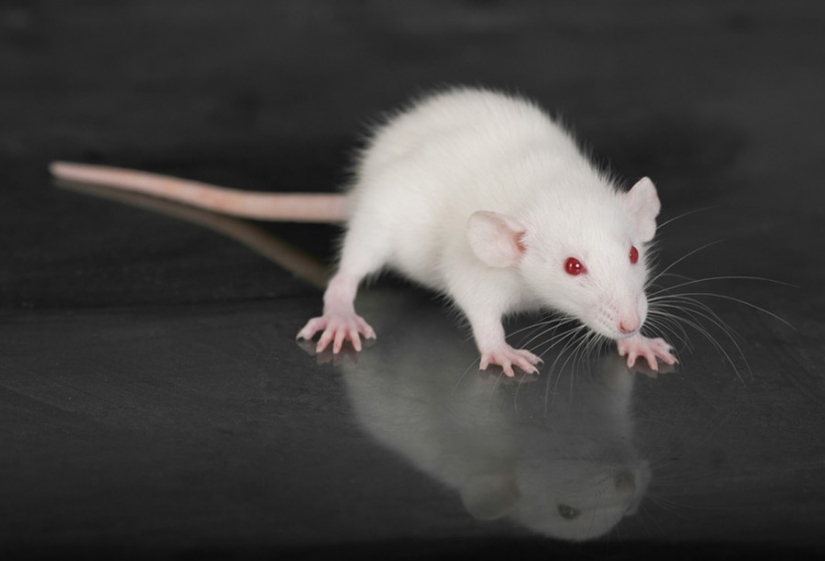
7. The Landis Experiments (1924)
Landis then ordered the students to cut off the rat's head. Most of them agreed. It was not possible to find any regularities in facial expressions, but Landis rightly concluded that a person is capable of a lot in a group under the influence of authority.

8. Study of the effect of drugs on the body (1969)
Monkeys who took cocaine began to suffer from convulsions and hallucinations — the poor animals tore out their phalanges of fingers. Those who used amphetamine pulled out all the hair from themselves, and animals that were exposed to the simultaneous action of cocaine and morphine died within two weeks after the start of taking it.
9. The Stanford Prison Experiment (1971)
At first, the students were confused, but the second day of the experiment put everything in its place: the uprising of the " prisoners "was brutally suppressed by the"guards".
Gradually, the control system was so tightened that the "prisoners" were not left alone even in the toilet. When the "prisoners" were asked what their names were, many of them gave their number. The "prisoners" got so used to their roles that they began to feel like prisoners of a real prison, and the students who got the role of "warders" felt real sadistic emotions towards people who a few days ago were good friends for them.
The experiment was planned for two weeks, but it was stopped ahead of schedule for ethical reasons.
Keywords: Horror | Psychology | Experiment
Post News ArticleRecent articles

It's high time to admit that this whole hipster idea has gone too far. The concept has become so popular that even restaurants have ...

There is a perception that people only use 10% of their brain potential. But the heroes of our review, apparently, found a way to ...
Related articles

Have you heard of such a phenomenon as the doorway effect? Let's put it simply: have you ever walked into a room and immediately ...

Horror is a genre of cinema that has become a springboard into the big cinema of many venerable Hollywood actors. Laurence ...

Renowned psychiatrist Carl Gustav Jung believed that our dreams — a message we sent to our unconsciousness. Analytical ...
New Year's is a time to surprise and delight loved ones not only with gifts but also with a unique presentation of the holiday ...