
Why do the British build wavy fences?
Categories: Design and Architecture | Europe
By Pictolic https://www.pictolic.com/article/why-do-the-british-build-wavy-fences.htmlEver since school, everyone knows that the shortest distance between two points is a straight line. Therefore, when asked which fence is more profitable to build - an even one or a complex configuration, everyone will choose the first option. And it won't necessarily be right. After all, there are wavy fences, and their shape is directly related to the saving of materials.

In Suffolk, in the east of England, wavy brick fences have been built for many centuries. These fences wriggle like snakes and cause surprise among people who are not privy to their secret. It must be said that such fences are a feature of the county and in other regions of the country many have not even heard of them.
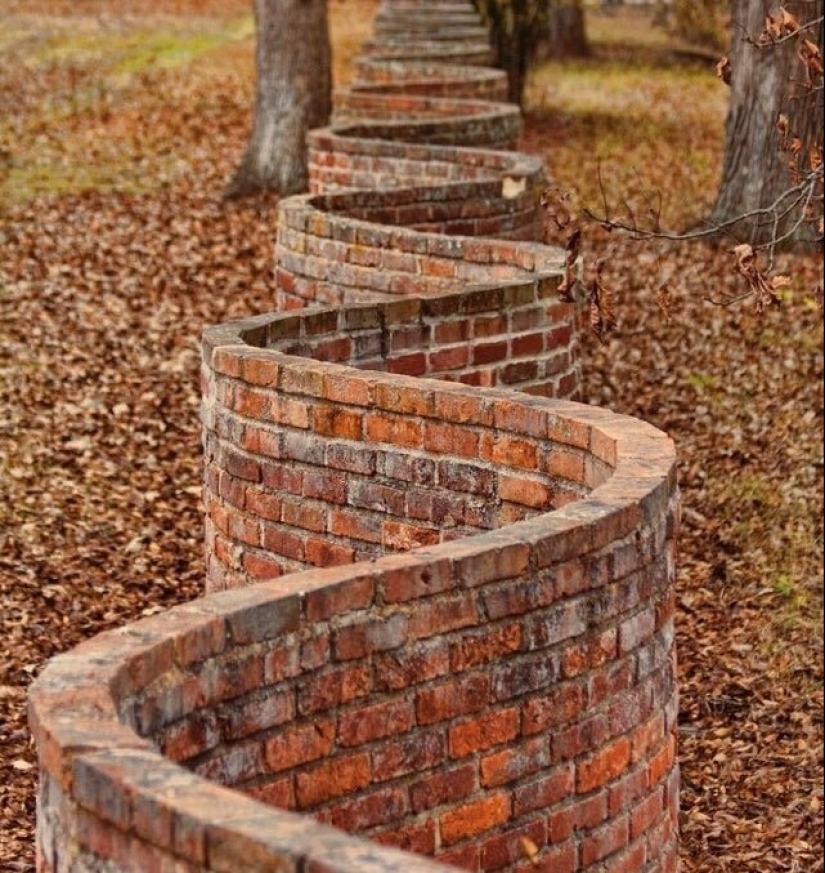
But why build such fences, because it is difficult and expensive? Regarding the first statement, it is obvious that laying a curved wall requires more time and effort. But as for the financial side of the issue, the opposite is true. Such fences are more profitable than direct ones and their owners save a lot on materials.
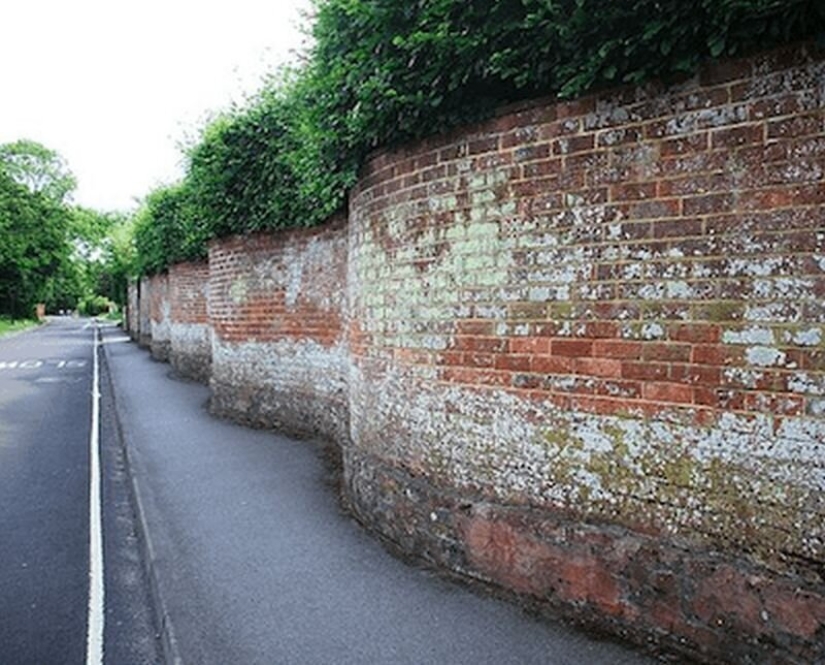
A straight fence half a brick thick is unreliable. With some effort, it can be knocked over. To make the fence stable, lay it in brick or even one and a half. A wavy fence, even a thin one, has excellent resistance to external influences. All thanks to the alternation of concave and convex sections.

The British call wavy fences differently: serpentine (“snake”), crinkum crankum (“curved in a zigzag”), ribbon wall (“ribbon wall”). Many people believe that this is a native English invention, and they are mistaken. This fencing design was invented by the Dutch, who called it “slengenmuur”, that is, “snake wall”. In England, foreign experts began building their fences in the 17th century.
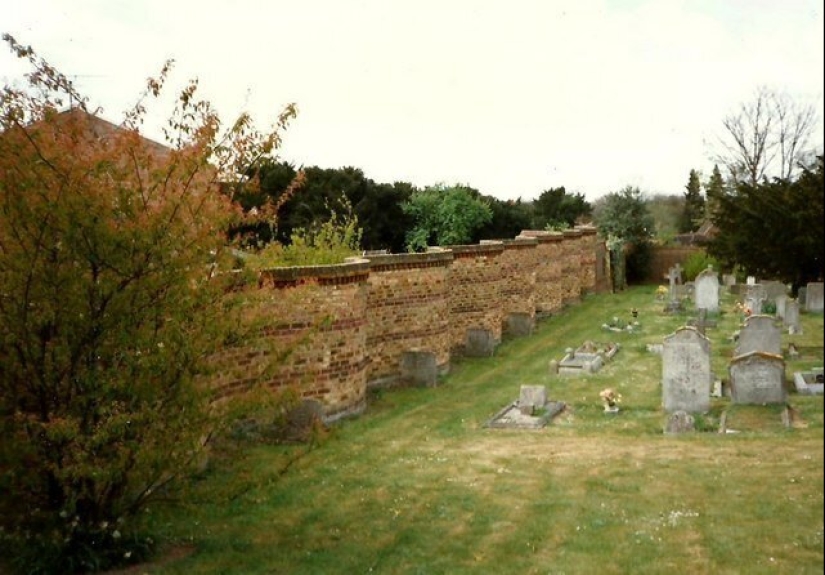
There are 50 of these walls left in Suffolk. Another dozen or two wavy fences can be found in other parts of the country. They are also available in the USA, but overseas such a design is very rare. Thomas Jefferson (1743-1826), who became the third president of the United States, used this idea to build the University of Virginia. Because of this, one can come across the claim that this is his invention.
Recent articles

It's high time to admit that this whole hipster idea has gone too far. The concept has become so popular that even restaurants have ...

There is a perception that people only use 10% of their brain potential. But the heroes of our review, apparently, found a way to ...
New Year's is a time to surprise and delight loved ones not only with gifts but also with a unique presentation of the holiday ...