
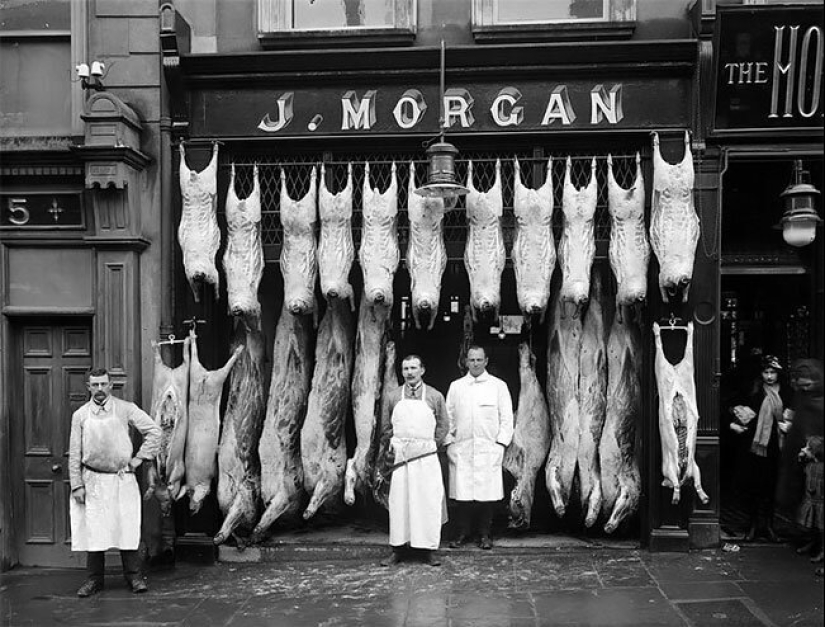
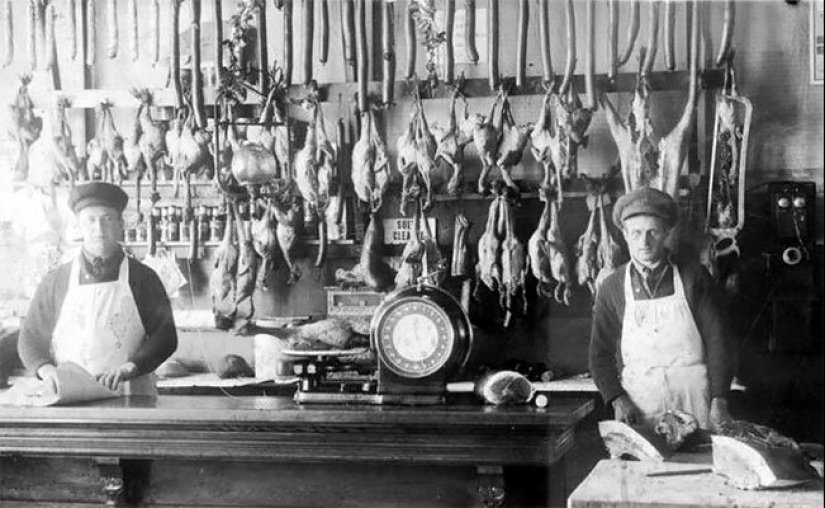
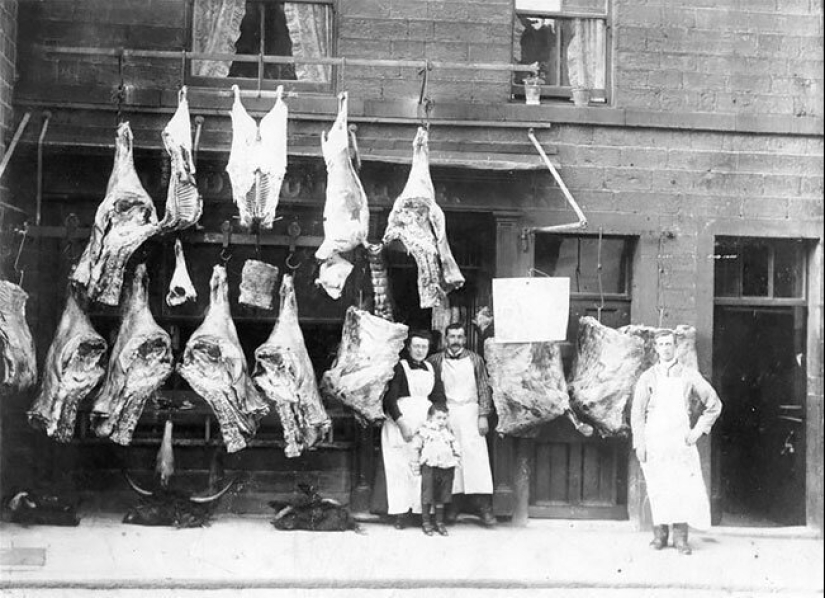
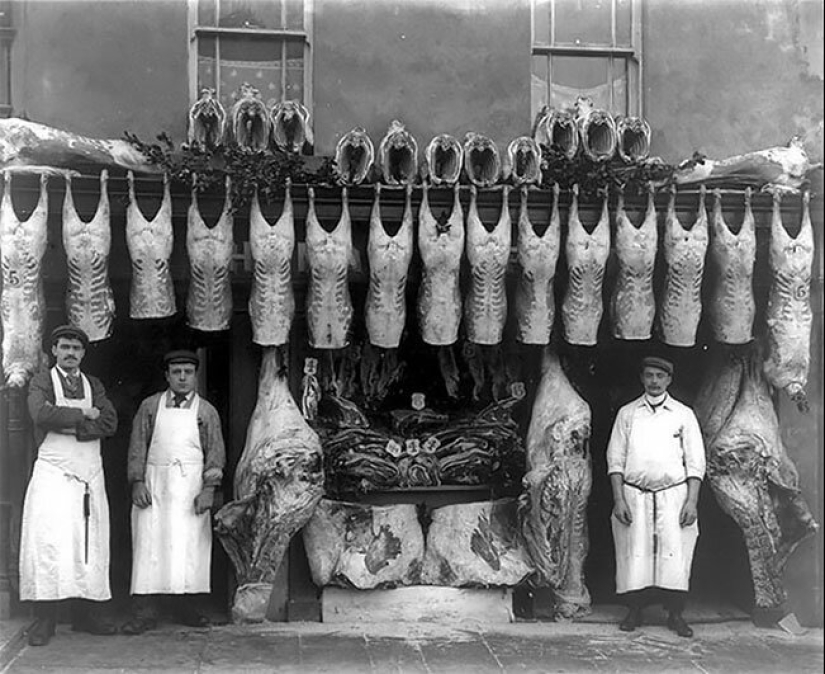
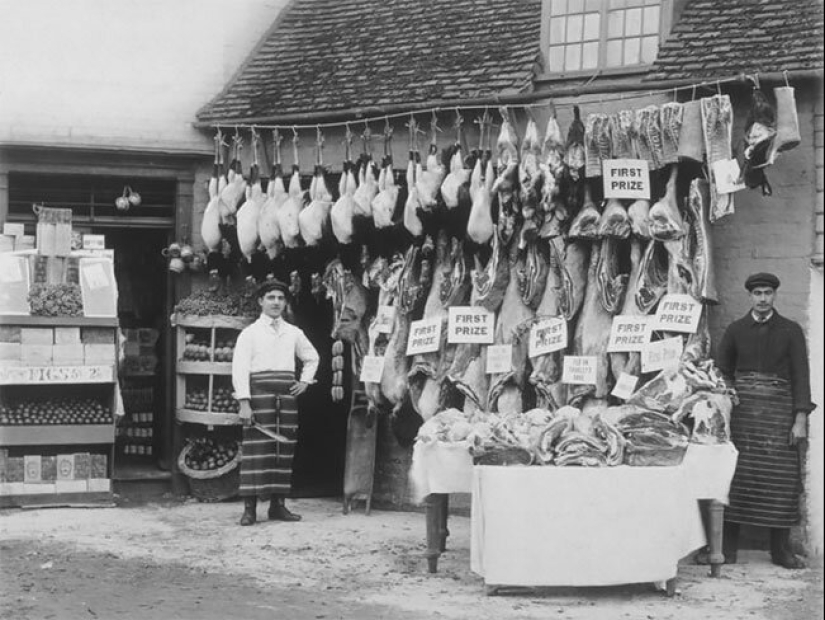
The time of fridges: a butcher's shop in Victorian England
Categories: Europe | Food and Drinks | History
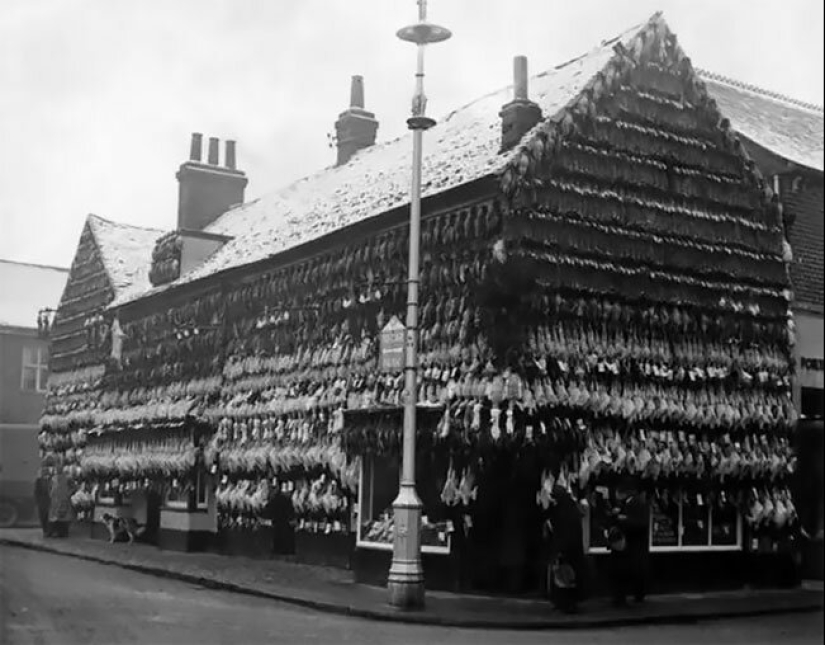
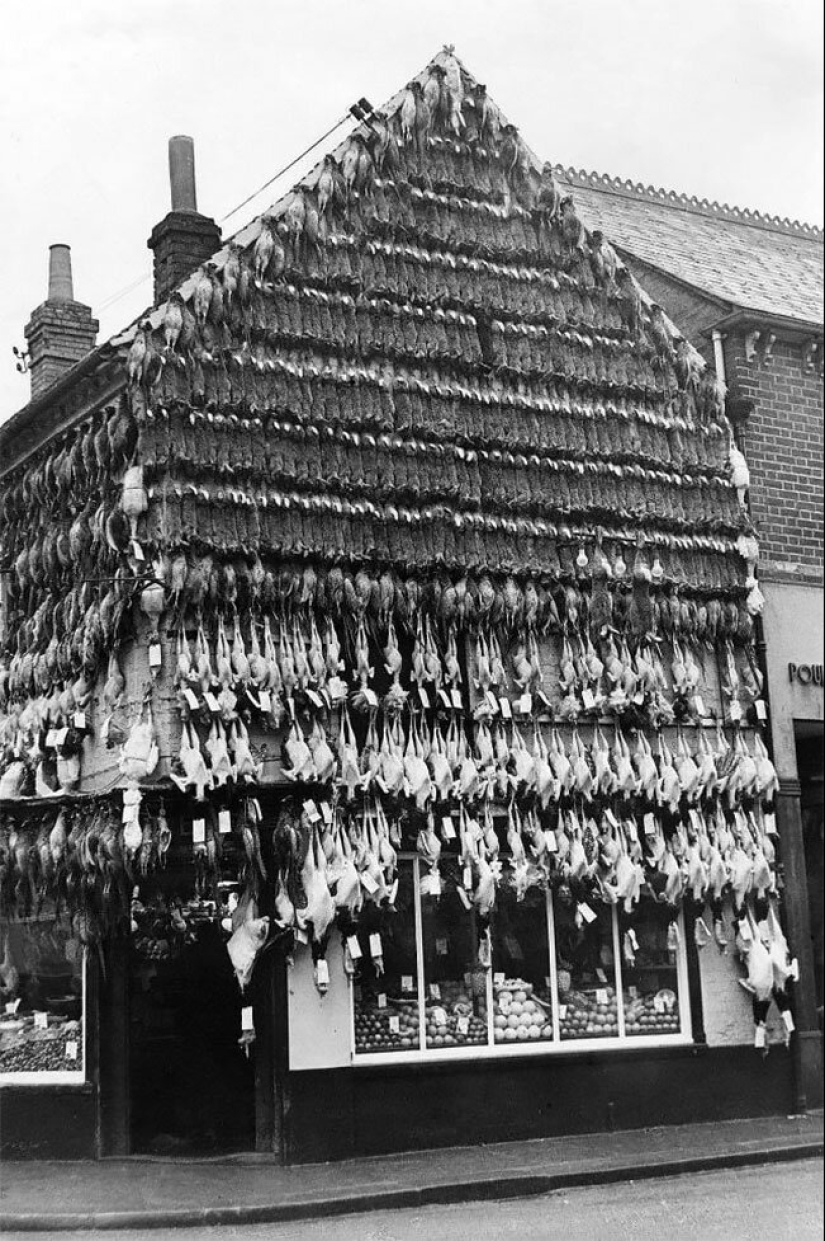
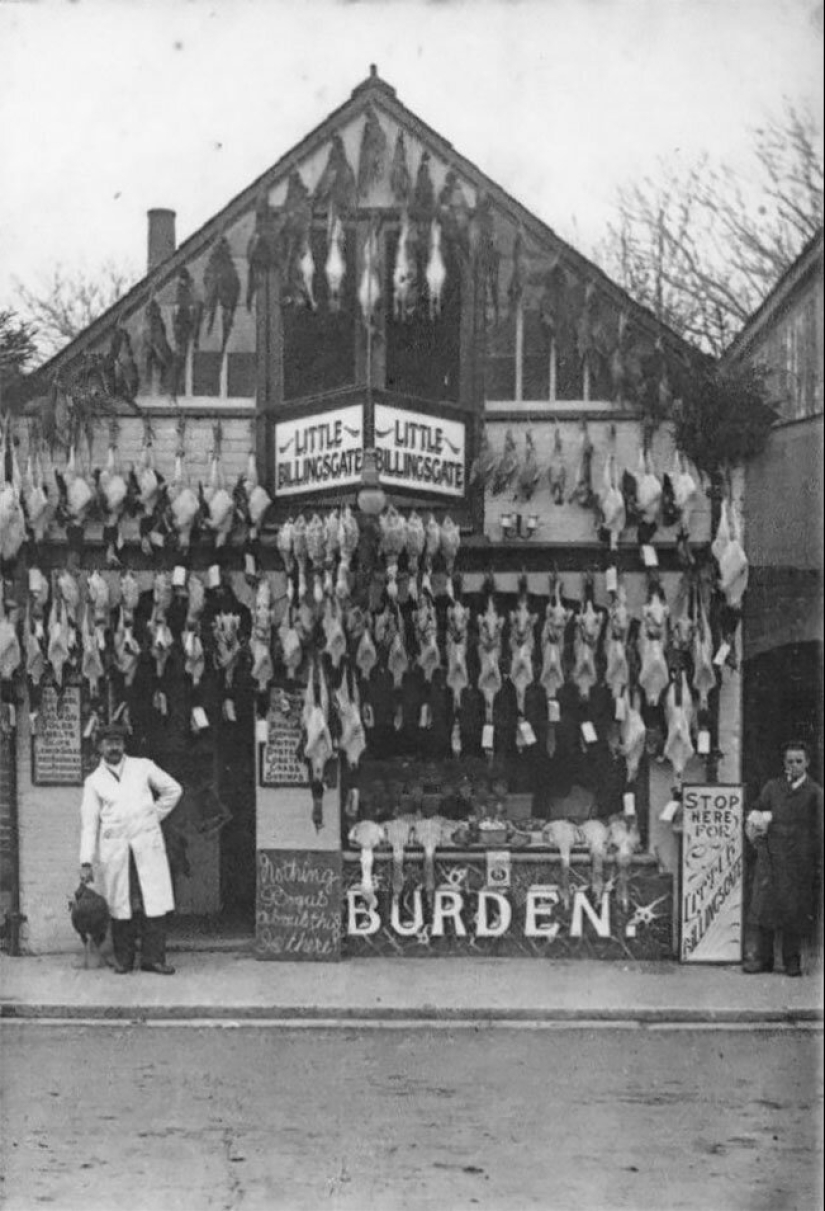
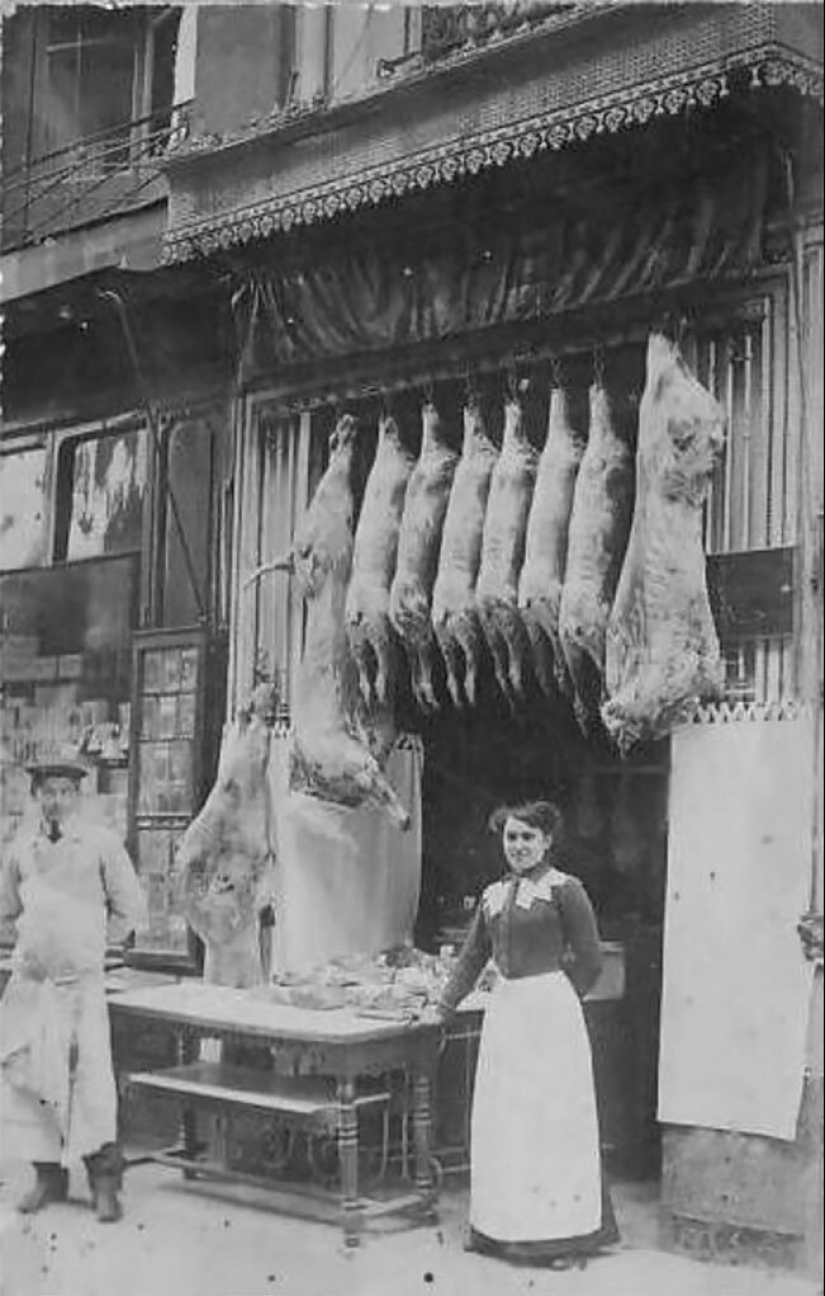
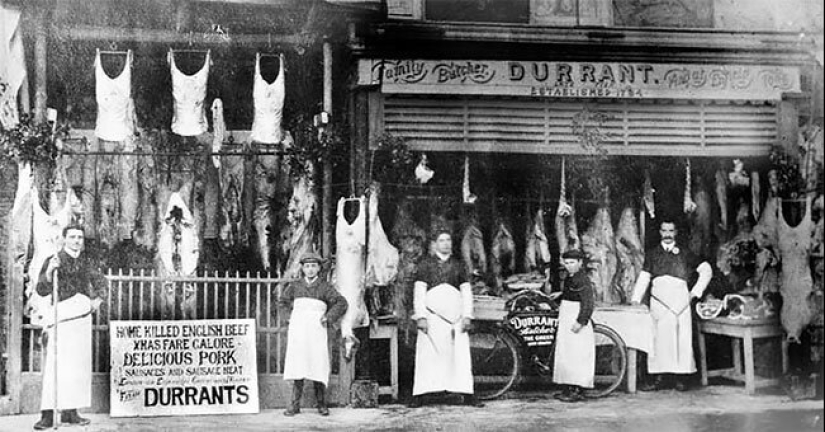
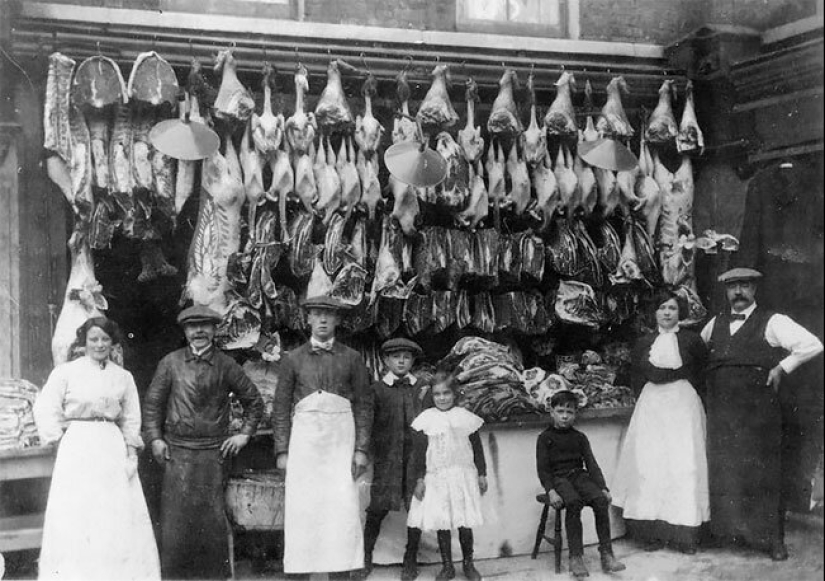
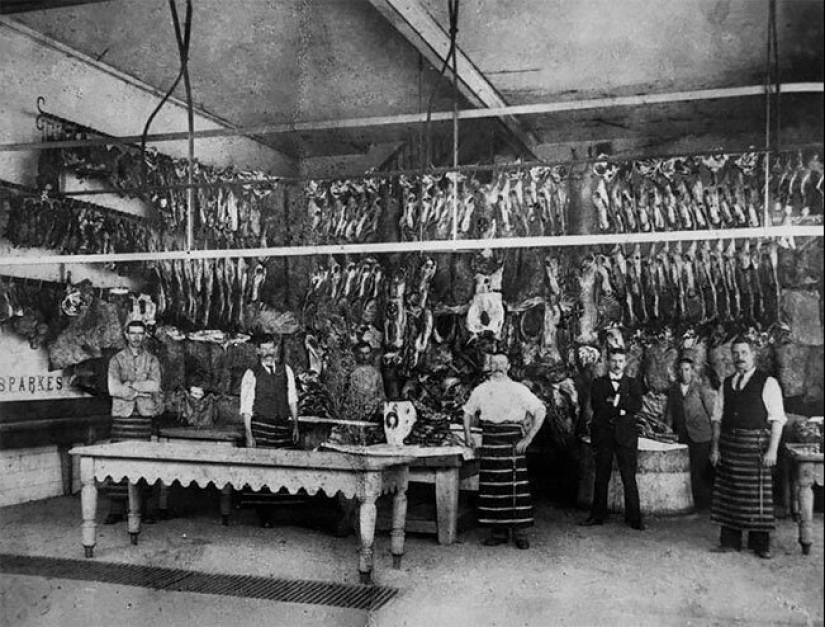
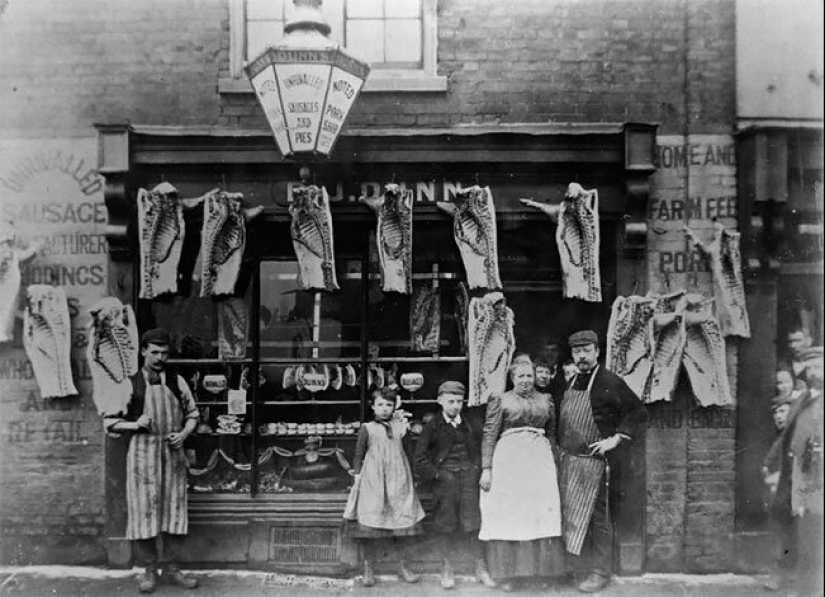
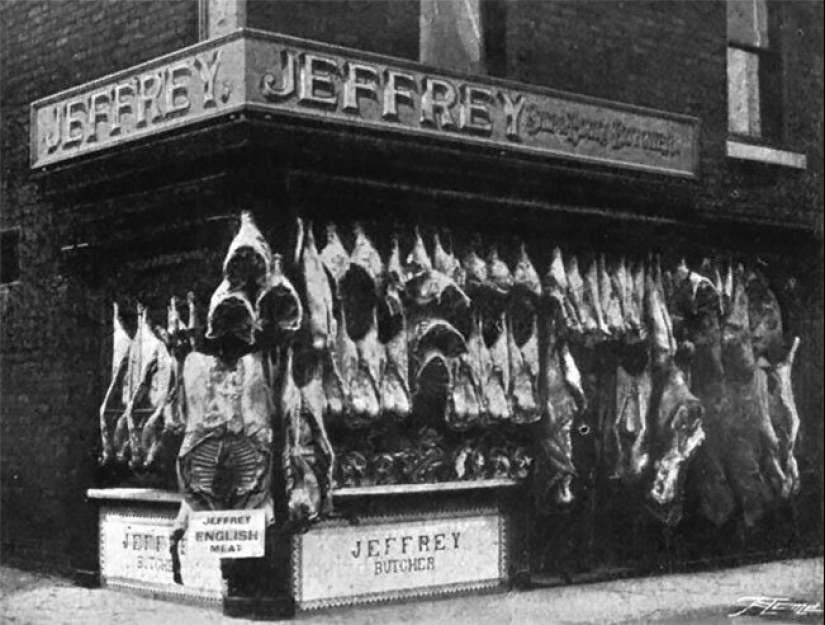
By Pictolic https://www.pictolic.com/article/the-time-of-fridges-a-butchers-shop-in-victorian-england.htmlIn the Victorian era Britain was quickly urbanized. By 1851 it became the first country lived in cities of more people than in the rest of the country. In those years rapidly blossomed the food industry, and the local butchers was a lot of work. How to look then a butcher's shop without refrigerators? Take a look at these unique pictures!
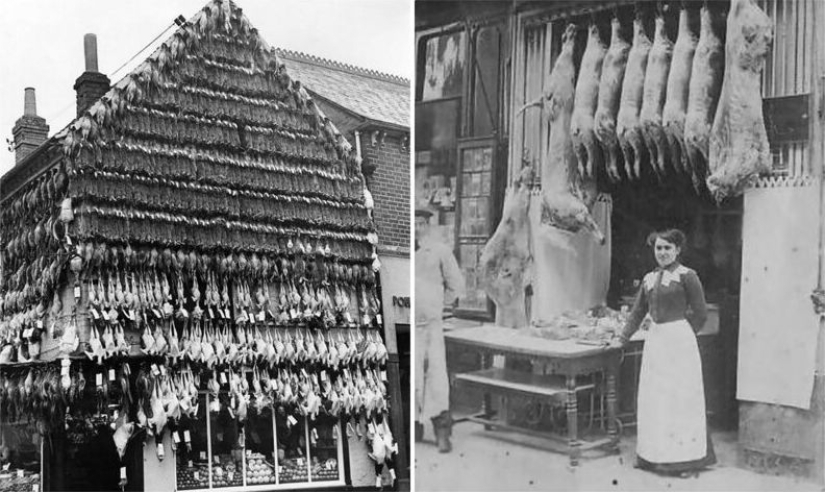
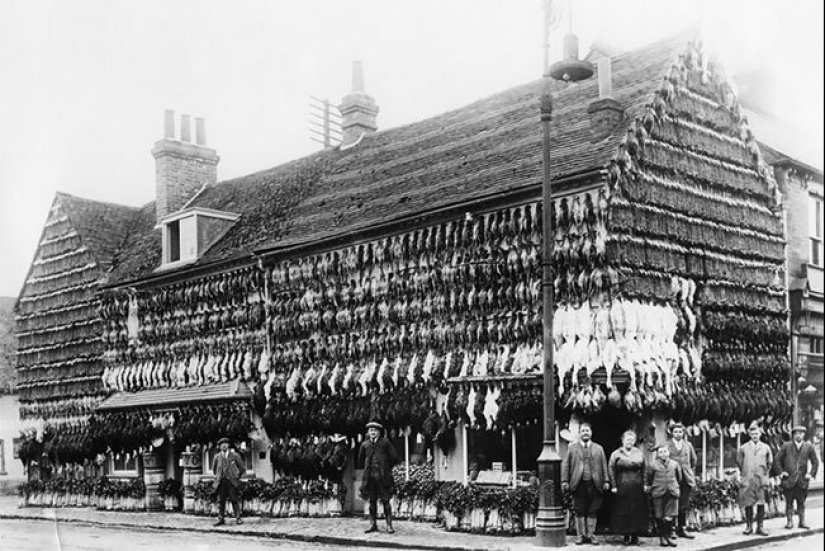
In the Victorian era, the British eat a lot of meat. No part of the carcass was not wasted — eat everything from nose to tail, splitting into parts and the softness. Rich bought a fillet — since refrigerators did not exist, for it came three times a day. The poor sold cropping and cartilage. Bones bought to flavour soups. Say bought some blood to drink — it was supposedly good for tuberculosis.
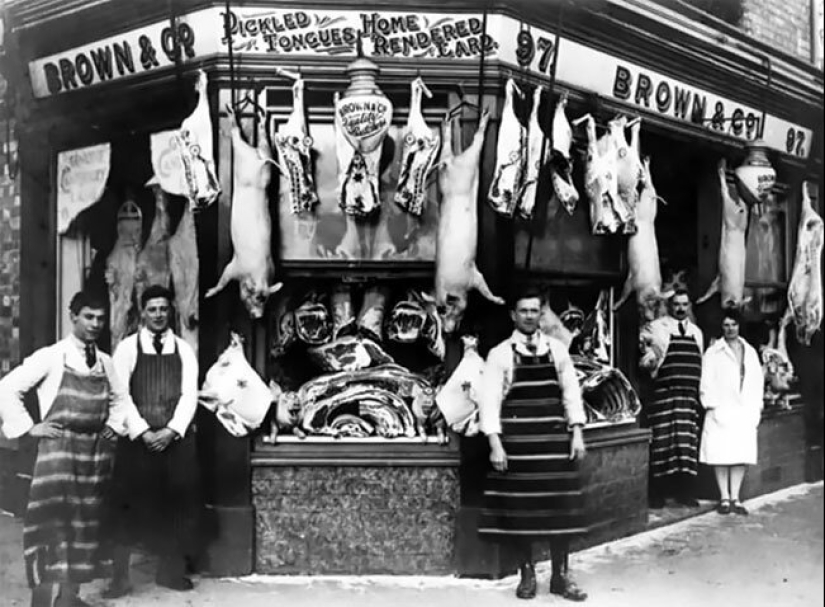
At the butcher shop typically purchased every day (again because of lack of refrigerators). In warm seasons the meat was preserved using large amounts of salt. The situation changed a bit by the end of the century, when beef began to be stored in "ice boxes".
In the Victorian era lived by the principle "Eat, drink and be merry", and the main part of the diet of the British were concentrated on the meat. The tables at feasts were Laden with whole roasted rabbits, birds, pork feet and heads.
Keywords: England | Britain | Victorian era | Butcher | Meat retail | Refrigerators
Post News ArticleRecent articles

It's high time to admit that this whole hipster idea has gone too far. The concept has become so popular that even restaurants have ...

There is a perception that people only use 10% of their brain potential. But the heroes of our review, apparently, found a way to ...
Related articles

Spent an entire year of British photographer Simon Roberts (Simon Roberts), exploring the vast Russian expanses. It was almost 14 ...

What did the petty criminals of the XIX century look like? We offer you a look at the faces of English prisoners held in a penal ...

If Dracula had decided to emigrate from his native Transylvania to the foggy Albion, he would probably have chosen Whitby Abbey as ...
New Year's is a time to surprise and delight loved ones not only with gifts but also with a unique presentation of the holiday ...