
Samurai Without Masks: The Truth About Japan's Legendary Warriors
Categories: Asia | Culture | History | Nations
By Pictolic https://www.pictolic.com/article/samurai-without-masks-the-truth-about-japan39s-legendary-warriors.htmlThe image of the samurai is firmly rooted in popular culture: a stern warrior in armor, with a katana and an iron code of honor. But who were these people really? How did they live, create families, what were their interests, what did they believe in and how did they build their daily lives? Let's dive into an era where discipline, duty and the sword were not just words, but the foundation of an entire civilization.
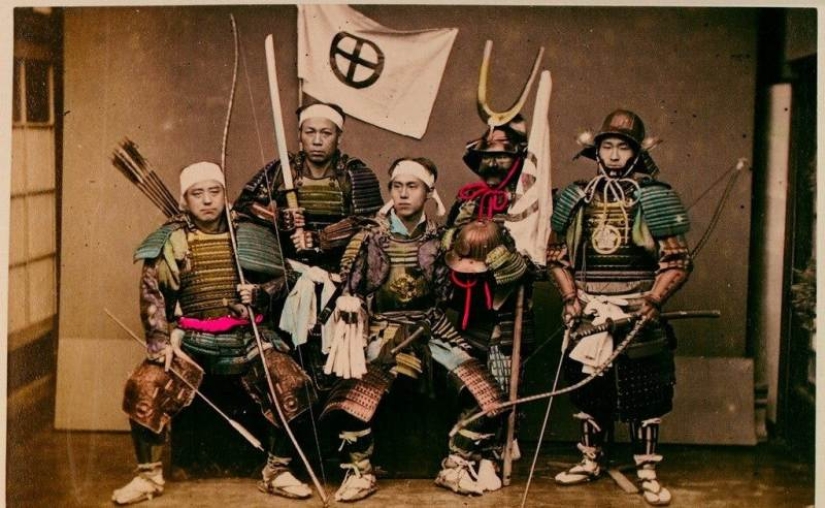
Samurai has become one of the most recognizable symbols of Japan these days. But most of us know them from movies, books and comics. But how did these noble warriors really live? What did they believe in, how did they organize their lives and what family values did they profess? Let's try to figure it out and get rid of the idealized image imposed by mass culture.

In feudal Japan, samurai were a privileged military class. Their duties went far beyond guarding their masters – they accompanied them on military campaigns and performed many other important tasks. Since samurai were warriors first and foremost, their “golden age” coincided with periods of war, civil strife and general unrest.
In difficult times, the samurai class achieved its greatest influence. The code of honor, military art, and warrior culture became key elements of Japanese life. Traditionally, the Kamakura period (1185–1333) and the Muromachi period (1336–1573), including the Sengoku era, are considered the “golden age” of the samurai. It was then that endless wars between feudal lords took place. Among the samurai, there were not only Japanese people - for example, the African warrior Yasuke, who arrived in Japan in 1579, became the first foreigner to be honored with the title of samurai thanks to his courage and loyalty to the daimyo Oda Nobunaga.
The samurai code of honor, bushido, or the "way" of the warrior, did not appear as a set of rules drawn up by someone. It was born as a gradually developing system of moral and behavioral norms that regulated all aspects of the samurai's life. The formation of the code took several centuries, beginning in the 8th century, and was closely connected with the political, social and religious history of medieval Japan.

The term "bushido" itself became widespread only in the modern era, especially in the 19th and 20th centuries. It began to be used to describe the samurai code retroactively. At that time, Japanese society, gradually losing its roots and becoming increasingly "European", tried to understand and systematize its past. This became especially noticeable in the Meiji era and before World War II, when the ideals of bushido became part of national propaganda.
If you asked a medieval samurai where he could find a book called Bushido, he would probably not have been able to answer. Although these rules guided his life, they cannot be thought of as an ancient tome full of age-old wisdom. The Bushido code was heavily influenced by two religions prevalent in Japan. Confucianism emphasized duty, hierarchy, filial loyalty, respect for elders, and clan structure. Shintoism, on the other hand, fostered a sense of spiritual connection to one’s clan, ancestors, and emperor.
Bushido is a wonderful combination of the cult of nature and ancestors, belief in magic, the existence of souls and spirits in surrounding objects, love for the homeland and the sovereign, a special attitude to death and belief in the reincarnation of souls. At the same time, the only occupation worthy of a samurai was military affairs. And if a warrior found himself in a situation that could tarnish his honor, the only way out was suicide.

Daidoji Yuzan, a samurai, philosopher, and military theorist of the 17th and 18th centuries, accurately formulated the samurai code in his book, The Elements of Martial Arts. He believed that the true courage of a samurai is demonstrated by the ability to live when it is right and to die when duty demands.
Yuzana wrote that a samurai should think about death constantly, starting from childhood. Then it will not cause him fear. That is why in battle the samurai went without hesitation, ignoring spears and arrows. He could rush alone with a sword at several opponents, demonstrating amazing courage and complete disdain for death. Dying should be easy, with a smile on the lips.
A samurai had to remain an example not only in battle, but also in everyday life. A self-respecting warrior had to understand poetry, master the art of the tea ceremony and be able to maintain a conversation on various topics. In their personal lives, samurai avoided licentiousness, and in food they avoided gluttony.

The three main virtues of a warrior are loyalty, justice and courage. The interests of his master always came first for a samurai. When going to war or carrying out a mission, a warrior was obliged to abandon thoughts about his wife, children and any personal matters.
At the same time, the family occupied an important place in the life of a samurai. It was a kind of miniature Confucian society. By marrying and continuing the family line, warriors seemed to be paying a debt to society. Men could only marry girls from samurai families. Such unions were usually based not on love, but on camaraderie and adherence to traditions. The family life of samurai is worth telling separately.
A family was considered a sign of a worthy position for a samurai. But not everyone could afford it. Poor warriors often did not have the opportunity to feed their wives and children, because the expenses were significant. In addition to weapons, armor and a horse, it was also necessary to maintain a squire. He took care of the equipment on the campaign and helped the samurai solve everyday issues.

Young samurai focused primarily on duty and a military career, rather than on starting a family. For those from poor samurai families, this was often the only path to success and, ultimately, to starting a family. In marriage, the husband always became the leader, and the woman remained in a subordinate role. The samurai's wife became the embodiment of loyalty and patience. Her duty was to wait for her husband from a campaign, even if there was little hope of his return.
Samurai sons were born into the warrior class, and daughters, like their mothers, were required to marry only samurai. Girls were brought up extremely strictly in families. They were subject to many prohibitions, and chastity and obedience were considered the main virtues. In medieval Japan, it was believed that if a daughter suffered in her parents' home, then in her husband's house she would be able to bear any treatment more easily.

Boys, on the contrary, were not forbidden anything. They were not intimidated or teased, so that they would grow up brave and have a sense of self-worth. Samurai sons were taught politeness, how to conduct conversations correctly, maintain posture and, of course, how to handle weapons. From the age of five, boys carried wooden swords and constantly practiced fencing.
In the second half of the 19th century, after the arrival of Commodore Perry's "black ships" (1853), Japan began to actively adopt Western technology, politics, and military affairs. The country realized the need for reform, including changes in the military. In an era when the army became closely linked with technology, Japanese warriors continued to live by medieval ideas and use ancient weapons.

Emperor Meiji began large-scale reforms in 1863. He abolished the classes in Japanese society, including the samurai. The empire introduced universal military service, and city dwellers and peasants found themselves in the army. Wearing swords in public places was also strictly prohibited, as were sword fights.
Some samurai tried to resist. The most famous was the rebellion of Saigo Takamori in 1877. It was called the Satsuma Rebellion. The armed uprising ended in defeat - the few rebels with traditional weapons were unable to resist the new Japanese army of the European type. This was the last act of resistance of the old military class and, in fact, the end of the samurai era.

Now I'm curious to know your opinion: what do you think we could learn from the samurai today - their discipline, sense of duty, or attitude to life and death? Share your thoughts in the comments!
Recent articles

It's high time to admit that this whole hipster idea has gone too far. The concept has become so popular that even restaurants have ...

There is a perception that people only use 10% of their brain potential. But the heroes of our review, apparently, found a way to ...
New Year's is a time to surprise and delight loved ones not only with gifts but also with a unique presentation of the holiday ...