
My Aerial Photos Showcasing Tombs In Vietnam From The Nguyen Dynasty Era
Categories: Art | Beauty | Design and Architecture | Photo project | Society | World
By Vika https://www.pictolic.com/article/my-aerial-photos-showcasing-tombs-in-vietnam-from-the-nguyen-dynasty-era.htmlMentioning Hue evokes not only the citadel, palaces, temples, and pagodas but also the sprawling royal tombs of the Nguyen emperors. These architectural masterpieces represent the pinnacle of traditional artistry and harmony beautifully with their natural surroundings.
“They are the works of the most skilled artisans and craftsmen in the country, expressing unique variations on a unified theme.
Each royal tomb, with its unique character, represents a magnificent achievement in landscape architecture. Each tomb evokes a special resonance in the emotions of visitors, embodying a SPIRITUAL architectural genre that reflects the interconnectedness of human life with the heavens and earth, bridging the realms of yin and yang.
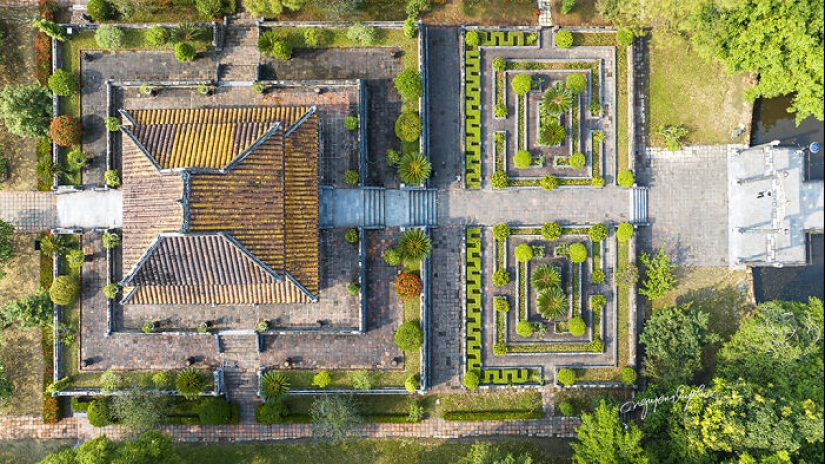
I want to introduce you to this photo collection featuring aerial shots taken with a drone, showcasing angles and frames that depict the solemnity, serenity, and eternal nature of the spiritual world through the architecture of that era.
More info: nguyenvuphuoc.com | Facebook | twitter.com
8 PHOTOS
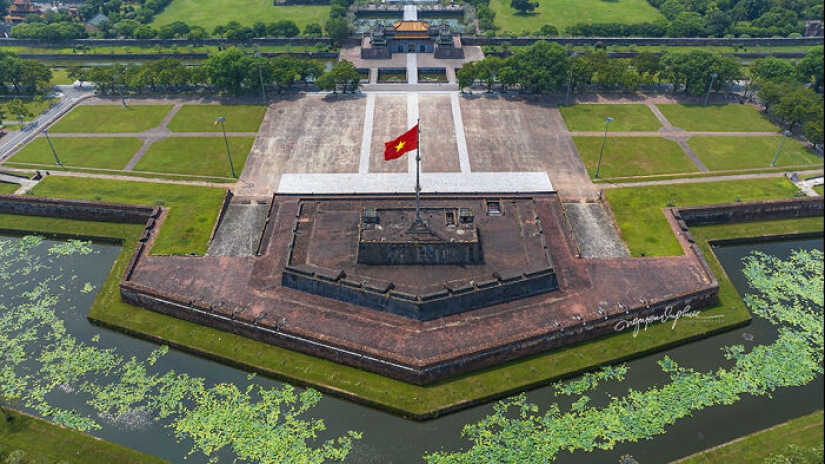
#1
Following the establishment of the Nguyen Dynasty, building upon the groundwork diligently laid by their ancestors, King Gia Long (1802-1820) carried out the construction of Hue Imperial City with a planning mirrored that of the Phu Xuan citadel of the feudal lords but on a much grander scale.
For millennia, the profound concept of “sinh kí tử quy” (life-giving, death-receiving) has deeply influenced Chinese emperors, prompting them to prioritize the construction of tombs as their eternal homes in the afterlife. Historical records also note the existence of magnificent tombs in China dating back thousands of years, regarded as wonders of ancient East Asia.
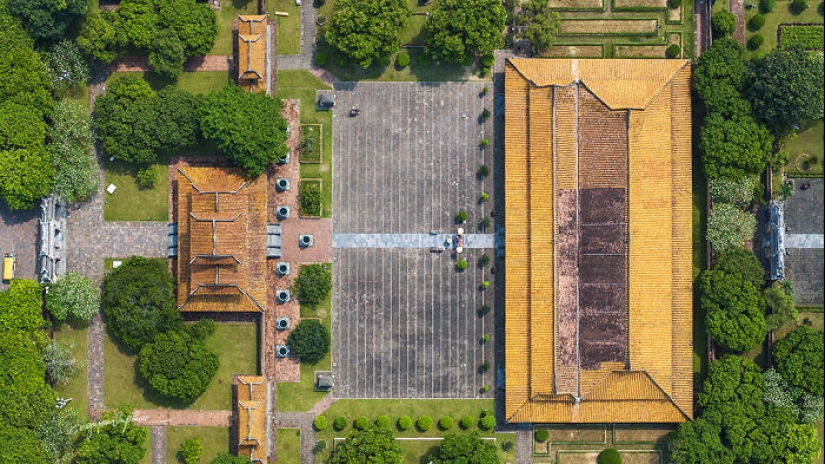
#2
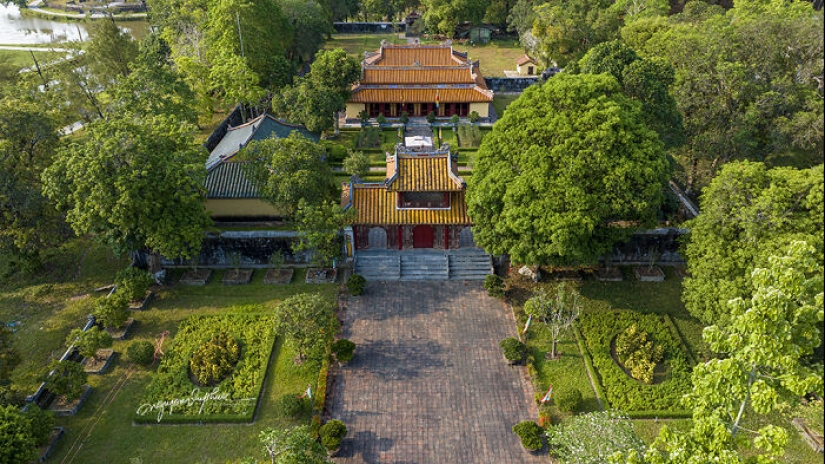
#3
The royal tombs of the Nguyen Dynasty are among the significant components of the overall architectural landscape of the Hue capital - a UNESCO World Cultural Heritage site since 1993.
Influenced by the longstanding culture of China, tomb architecture appeared early in Vietnam’s history. However, it was not until the Nguyen Dynasty (1802-1945) that tomb architecture became a distinct genre with unique and remarkable achievements. The application of feng shui principles in tomb construction became particularly significant for the dynasties of that era in Vietnam.
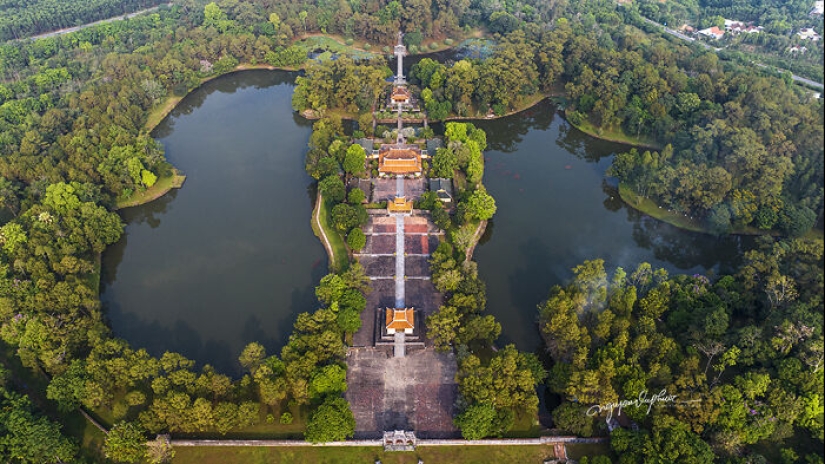
#4
#5
King Gia Long personally selected a site to build his “eternal home” within the area designated by his ancestors as the resting place for the Nguyen family, known as Thien Tho Tomb (天授陵).
The construction began in 1814 and was completed in 1820.
Later, this tomb complex expanded to encompass seven distinct tombs, covering an area of 2,875 hectares and located approximately 16 kilometers southwest of the Imperial City.
It became the furthest site from the Imperial City, marking the westernmost extremity. Subsequently, Nguyen kings chose locations closer to the Imperial City, situated on both banks of the Huong River.

#6

#7
King Gia Long, the founder of the Nguyen Dynasty, is credited with establishing the Hue Imperial City and laying the initial groundwork for tomb architecture. However, the fundamental principles and regulations in tomb architecture were largely established by King Minh Mang and further refined by subsequent Nguyen kings.
In 1840, King Minh Mang began construction of his tomb, “Hiếu Lăng” (孝陵), after 14 years of searching for an auspicious site. It was situated at Cam Ke Mount (錦雞山), near the Bang Lang junction. However, when construction had just commenced, the king suddenly passed away.

#8
Keywords: Aerial Photos | Design | Architecture | Architectural masterpieces | Traditional artistry | Harmony
Post News ArticleRecent articles

It's high time to admit that this whole hipster idea has gone too far. The concept has become so popular that even restaurants have ...

There is a perception that people only use 10% of their brain potential. But the heroes of our review, apparently, found a way to ...
Related articles

Some people constantly complain about the lack of imagination. And I think we understood what it is… Just created the Earth, ...

Looking at this photo, you might think that it is a set for a movie about aliens. But this is not a dummy at all, but a real ...

A good designer can even banal things to make a work of art. Bad — on the contrary, spoil, and even problems will create. Here ...
New Year's is a time to surprise and delight loved ones not only with gifts but also with a unique presentation of the holiday ...