
How photographer Ara Guler showed the world the heart of Istanbul and its pain
Categories: Asia | Culture | Europe | History | Photo School
By Pictolic https://www.pictolic.com/article/how-photographer-ara-guler-showed-the-world-the-heart-of-istanbul-and-its-pain.htmlIstanbul through the eyes of Ara Güler is a city full of life, pain and memories. Orhan Pamuk shares the story of his friendship with the great photographer whose pictures reveal the soul of Turkey. From melancholic streets to tears in the office, this story will touch your heart. Read and see what Lost Istanbul looked like!
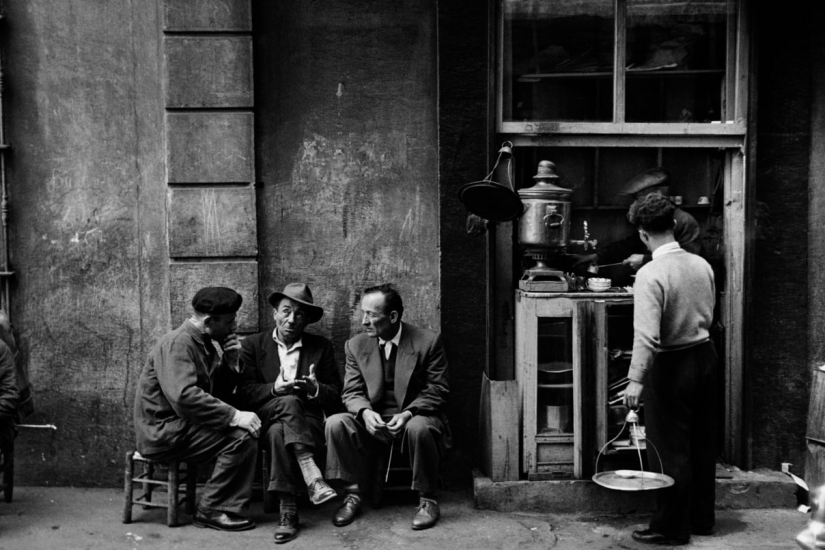
We present to your attention an adaptive translation of a column written in the first person by the famous Turkish writer Orhan Pamuk and published in The New York Times. In the article, Orhan remembers his friend Ara Güler, who is called the Turkish Cartier-Bresson and the Eye of Istanbul.

Ara Güler was a great photographer of modern Istanbul. He was born in 1928 to an Armenian family in Istanbul. Ara began photographing his hometown in 1950. In these pictures, he captured the lives of the people along with the city’s monumental Ottoman architecture, its majestic mosques and magnificent fountains. I was born two years later, in 1952, and lived in the same neighborhoods where he lived. Ara Güler’s Istanbul is my Istanbul.
I first heard of him in the 1960s, when I saw his photographs in Hayat, a popular weekly news and gossip magazine that emphasized photography. One of my uncles was an editor at the magazine. Ara published portraits of writers and artists like Picasso and Dali, as well as famous literary and cultural figures from Turkey’s older generation, like the writer Ahmed Hamdi Tanpınar. When Ara first photographed me after the success of my novel The Black Book, I was delighted to know that I had made it as a writer.

Ara photographed Istanbul faithfully for more than half a century, until the 2000s. I studied his photographs avidly. I wanted to see in them the development and transformation of the city itself. My friendship with him began in 2003, when I was studying his archive of 900,000 photographs. I was looking for photographs for my book Istanbul: City of Memories. He had transformed the large three-story house he had inherited from his father, a pharmacist from Galatasaray in the Beyoğlu district, into a studio, office, and archive.
The photographs I wanted to use in my book were not the famous works of Ara Güler that everyone knew about. They were the melancholic Istanbul that I described in that book, the dark atmosphere of my childhood. He had many more of these photographs than I expected. He hated images of a sterile, clean, touristy Istanbul. When Ara learned of my idea, he gave me access to his archives without any problems.

It was thanks to his urban reportage photographs that appeared in newspapers in the early 1950s, his portraits of the poor, the unemployed and people from the villages, that I first saw the unknown Istanbul.
Fishermen sitting in coffee shops and weaving their nets. Unemployed men getting drunk in taverns. Children playing with car tires in the shadow of the city’s crumbling ancient walls. Construction crews, railroad workers, boatmen pulling their oars to ferry citizens from one bank of the Golden Horn to the other. Fruit sellers pushing their carts. People wandering at dawn waiting for the Galata Bridge to open. Morning minibus drivers… Ara Güler’s attentiveness to the people of Istanbul is a testament to how he expressed his affection for the city through the people who live there.

Ara’s photographs seem to tell us: Yes, there is no end to the beautiful cityscapes of Istanbul, but the main thing is the people! The most important and defining characteristic of Ara Güler’s work is the emotional connection he makes between the cityscapes and individual people. His photographs also made me realize how fragile and poor the people of Istanbul were when they were presented in photographs against the backdrop of the city’s monumental Ottoman architecture, next to its majestic mosques and magnificent fountains.


But is there a difference between beauty and memory? Aren't things beautiful because they are a little familiar to you and similar to your memories? I liked discussing such questions with him.

Working with his archive of Istanbul photographs, I often wondered what it was that I liked so much about them. Would others like the same pictures? There is something overwhelming about looking at the forgotten and still vivid details of the city where I spent my life – the cars, the street vendors, the traffic police, the workers, the women in headscarves crossing bridges shrouded in fog, or the old bus stops, the shadows of the trees and the graffiti on the walls.

For those of us who, like me, have spent 65 years in the same city – sometimes without leaving for years – cityscapes eventually become a kind of index of our emotional lives. A street can remind us of the pain of being fired from a job. The sight of a particular bridge can bring back the loneliness of our youth. A town square can recall the bliss of love. A dark alley can be a reminder of our political fears. An old coffee shop can evoke memories of our friends who were sent to prison. A sycamore tree can remind us of how poor we were.

In the early days of our friendship, we never spoke about his Armenian origins and the tragic history of the extermination of the Ottoman Armenians. This topic remains taboo in Turkey. I felt that it would be difficult to talk to him about this heartbreaking topic, which could create tension in our relationship. He knew that if we started talking about it, it would make life more difficult for him in Turkey.

Over the years, Ara had come to trust me a little, and would sometimes bring up political topics he hadn’t discussed with others. He once told me that in 1942, to avoid an exorbitant wealth tax, the Turkish government had levied it on non-Muslim citizens. His father, a pharmacist, had been forced to leave his home in Galatasaray and hide in another house for months at a time, never going outside, to avoid being sent to a labor camp for failing to pay the tax.
He also spoke to me about the events of the night of September 6, 1955, when political tensions between Turkey and Greece reached their peak. That night, gangs organized by the Turkish government roamed the city, looting shops belonging to Greeks, Armenians, and Jews, and desecrating churches and synagogues. The rioters turned the central Istiklal Avenue, where Ara lived nearby, into a war zone.


Armenian and Greek families ran most of the shops on Istiklal Avenue. In the 1950s, I used to go to these shops with my mother. They spoke Turkish with an accent. When my mother and I walked back home, I would often imitate their Turkish accent. After the ethnic cleansing of 1955, which aimed to intimidate and expel the city's non-Muslim minorities, most of them left Istiklal Avenue and their homes in Istanbul. By the mid-1960s, almost no one was left.

Ara and I were comfortable talking about his photographing these and other similar events. However, we had not yet touched on the extermination of the Ottoman Armenians, his grandparents.
In 2005, I gave an interview in which I complained that there was no freedom of thought in Turkey and that we still could not talk about the terrible things that were done to the Ottoman Armenians 90 years ago. The nationalist press exaggerated my words. I was taken to court in Istanbul for insulting the Turkish nation. This charge could lead to a prison sentence of three years.

Two years later, my friend, the Armenian journalist Hrant Dink, was shot dead in Istanbul, in the middle of the street, for using the word Armenian genocide. Some newspapers began to hint that I might be next. Because of the death threats I received, the accusations leveled against me, and the vicious campaign in the nationalist press, I began to spend more time abroad, namely in New York. I would return briefly to my office in Istanbul, but I did not tell anyone that I had come.

On one of those short visits home from New York, in those dark days after Hrant Dink’s assassination, I walked into my office and the phone rang. I never picked up the office phone back then. There were pauses between rings, but still the phone rang again and again. It was hard, but I finally answered it. I recognized the voice immediately. It was Ara. “Oh, you’re back! I’ll be right there,” he said, and hung up without waiting for me to answer.
Fifteen minutes later, Ara came into my office. He was out of breath and cursing at everyone in his usual manner. Then he took me in his big arms and began to cry. Those who knew Ara knew how much he loved swearing and strong masculine expressions, and they will understand my amazement when I saw him crying. He continued to curse and tell me: They won't dare touch you, these people!

He couldn't stop crying. The more he cried, the more I felt a strange sense of guilt and couldn't say a word. Finally, Ara calmed down. He drank a glass of water, as if that was his main reason for coming to my office, and left.
After some time we met again. I began to work quietly with his archives again, as if nothing had happened. I no longer had the desire to ask him about his grandparents. The great photographer had already told me everything through tears.

Ara believed in a democracy where people could speak freely of their murdered ancestors, or at least mourn them freely. Turkey never became a democracy. The success of the last 15 years, a period of credit-fueled growth, was used not to expand the possibilities of democracy but to further restrict freedom of thought. And after all this growth and construction, Ara Güler's old Istanbul became, to use the title of one of his books, Lost Istanbul.

Orhan Pamuk’s heartfelt memoirs are not only a personal story of friendship, but also a testament to how art helps preserve the memory of a city that is changing before our eyes. Do you feel nostalgic for places that are disappearing from the map of your childhood? What would you like to preserve forever – a street, a smell, a voice, a face? Share your stories in the comments.
Recent articles

It's high time to admit that this whole hipster idea has gone too far. The concept has become so popular that even restaurants have ...

There is a perception that people only use 10% of their brain potential. But the heroes of our review, apparently, found a way to ...
New Year's is a time to surprise and delight loved ones not only with gifts but also with a unique presentation of the holiday ...