
British Gold Rush on Folkestone Beach
Categories: Europe | Holidays and Festivals
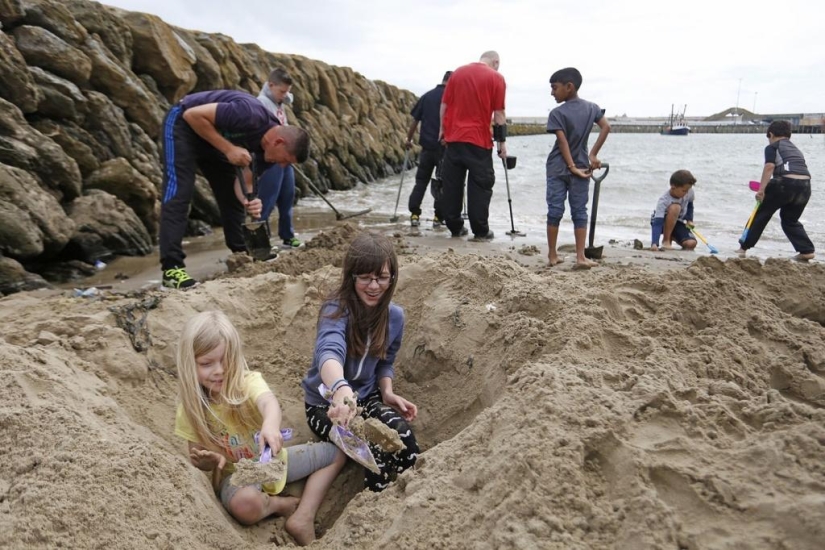
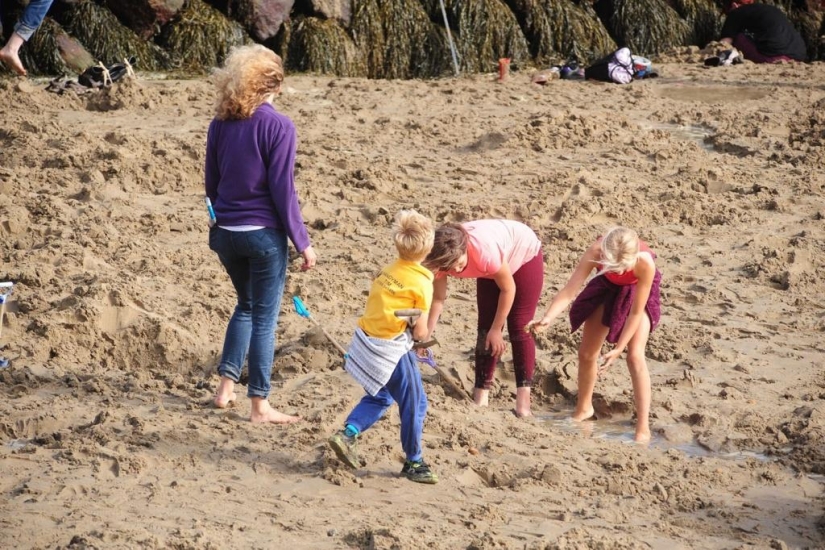
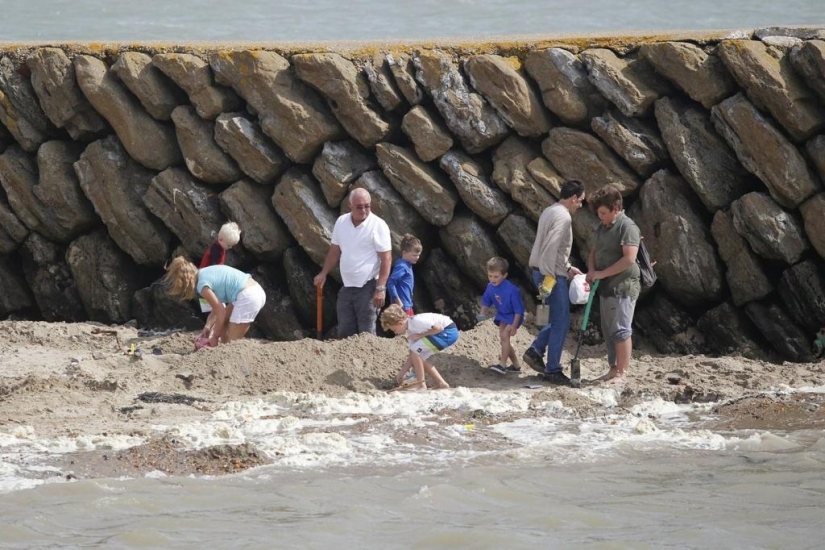
By Pictolic https://www.pictolic.com/article/british-gold-rush-on-folkestone-beach.htmlThe gold rush swept the English county of Kent. In the hope of getting rich, hundreds of locals poured out onto the beaches. They believe that a gold bar is buried somewhere there. And this is not an empty fantasy, but a bold art project. German artist Michael Sailstorfer buried 30 gold bars on the beach of the British city of Folkestone and offered to hunt for this treasure to everyone.
(8 photos in total)


1. German artist Michael Sailstorfer buried 30 gold bars worth about 16 thousand dollars on the beach of the British city of Folkestone and offered to find them. The search for the treasure will be one of the art events of the Folkestone Triennial of Contemporary Art, which will be held in the city from August 30 to November 2.

2. Anyone can try to find gold when the tide is out, the organizers of the art project noted. The difficulty lies in the fact that during the new high tide, the excavation site will be washed away, and the seekers will have to start work again.

3. The organizers of the triennial also added that the bars have different sizes and may differ significantly from those shown in the cinema. Nevertheless, each ingot can cost from 200 to 1000 dollars.
4. "In fact, sometimes a temporary project can leave the same mark in the collective memory as something more lasting," said Claire Doherty, director of Bristol—Based Arts, which commissioned the project. She explained that the reaction of the public to the art work is of particular interest to art historians. "Come what may. Maybe no one will want to look for anything," Doherty added.

5. The Folkestone Festival was founded in 2002 and is "one of the most ambitious public art projects presented in the UK."
6. The festival is held every three years, and its peculiarity is that participants are invited to use the city as a "canvas", creating works of art reflecting world problems in public places. At various times, artists Cornelia Parker, Jeremy Deller and Tracey Emin took part in the triennial.
7.

8.
Keywords: Gold rush | Gold | Beach | Ingot
Post News ArticleRecent articles

It's high time to admit that this whole hipster idea has gone too far. The concept has become so popular that even restaurants have ...

There is a perception that people only use 10% of their brain potential. But the heroes of our review, apparently, found a way to ...
Related articles

Sandy beaches grey, brown or even white shade is quite usual for us. Even rocky beaches with sharp cliffs that attract the bravest ...

For many of us, summer is, first of all, an opportunity to finally swim in the sea, lake, river or just a pool and sunbathe. In ...

In summer 1995, British photographer Martin Parr visited Yalta, which he himself called the "Russian Riviera". In this series you ...
New Year's is a time to surprise and delight loved ones not only with gifts but also with a unique presentation of the holiday ...