
As in the Danish Museum world appeared only a collection of ancient noses
Categories: Culture
By Pictolic https://www.pictolic.com/article/as-in-the-danish-museum-world-appeared-only-a-collection-of-ancient-noses.htmlToday it is difficult to find examples of things that wouldn't be collectibles and exposure. In Copenhagen the New Carlsberg Glyptotek houses the largest collection in the world... sculpted noses. As appeared in the Museum this strange showcase, and why the noses shown separately from individuals?

Antique statues are not always presented human cultural and historical value. They began to gather in the Renaissance, and before that for many centuries the immortal works of Greek, Roman and Egyptian masters just lay anywhere and even used for other purposes, for example, they propped up the fence.
It is obvious that many of the sculptures have sustained serious damage, for example, dragging on the ground or rolling they fought back protruding parts — hands, feet and noses. I must say that the noses of the ancient images were lost not only due to the negligence. In ancient times it was customary to "punish" degraded gods and emperors, disfiguring their image.
Especially the top Christians who are happy disfigured face priceless antique masterpieces, beating the noses and chins, and even carving on the foreheads of a cross as a symbol of the triumph of Christian good over evil pagan.
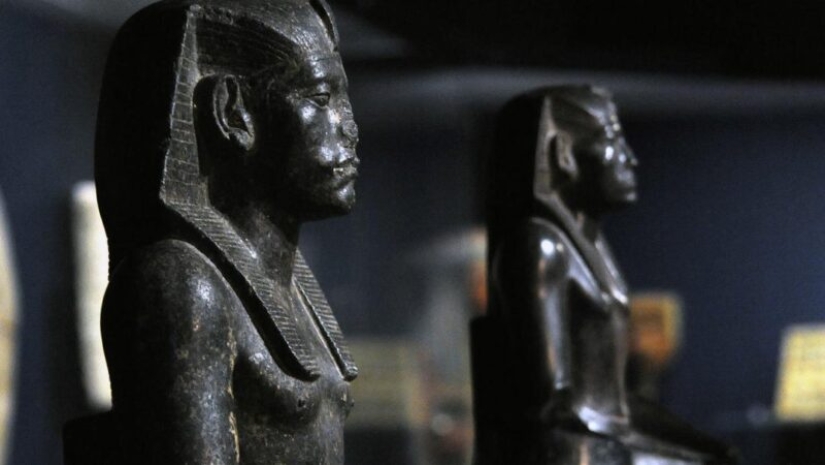
In Egypt, too, not much ceremony with statues, and the custom to beat the noses of the statues came to this country much earlier, Islam forbids images not only of foreign gods, but all people. Adela Oppenheim, curator, Department of Egyptian art at the Metropolitan Museum claims that the Egyptian statues were deprived of the nose, to punish or to deprive of sacred power.
The Egyptians believed that the "life force" included in the statues of the gods and people through the nose and, having beaten this part of the figure, can deprive the product of magical power. In particular, practiced such a disfigurement of the figures of the robbers of the tombs. They were sure that the owner of the desecrated graves will not be able to take revenge on them, as the image will lose a nose.
In Ancient Egypt it was deprived of noses not only of the statue. The perpetrators were often punished by cutting off of the nose and exile to remote places. There was even a special settlement called Rhinocorura — "City of cut noses", all the population of which consisted of such mutilated outcasts.
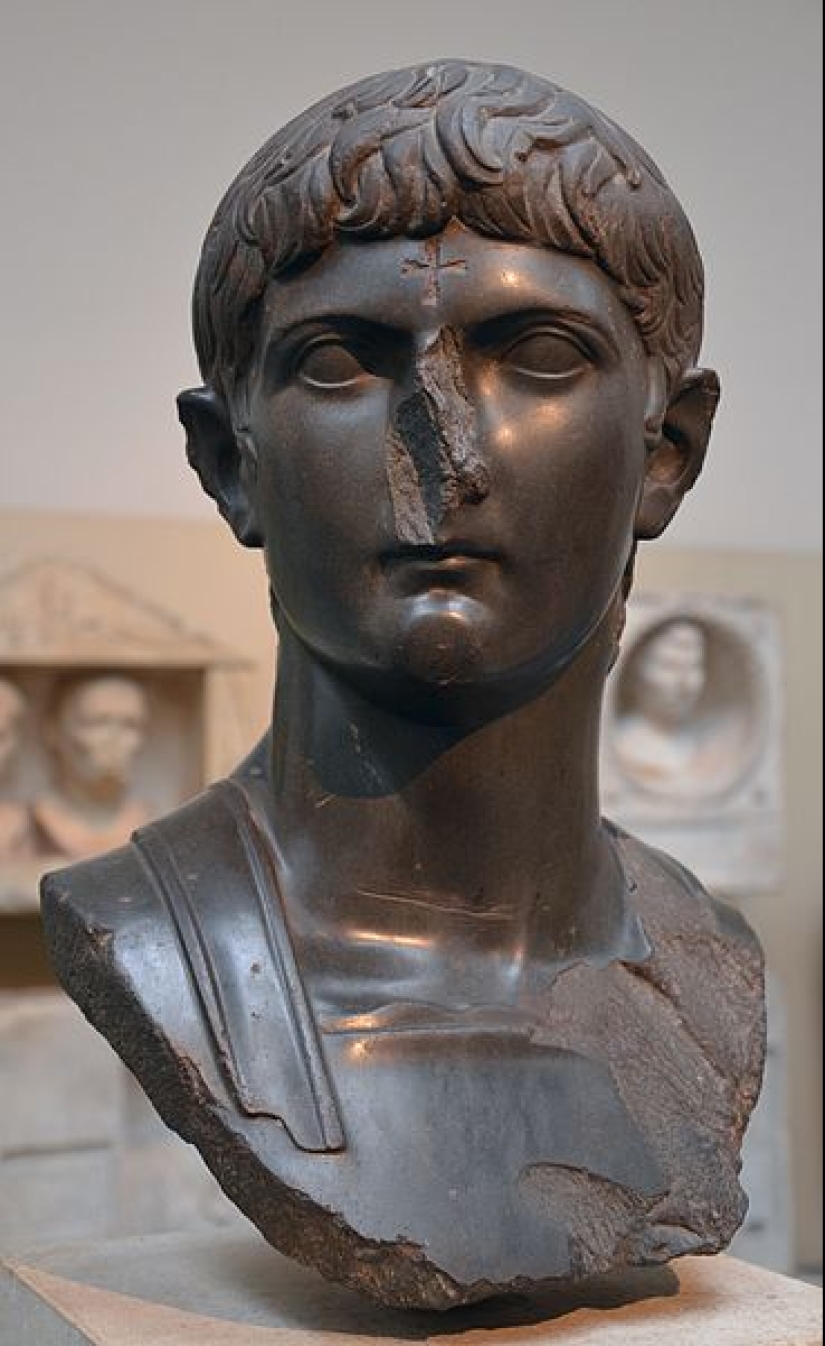
Germanicus bust without a nose, but with a cross on his forehead
Later discovered his passion for maiming and the inhabitants of Byzantium. There cut noses not only thieves and perjurers, but also emperors. For example, was overthrown in a Palace coup Emperor Justinian II opponents cut off the nose.
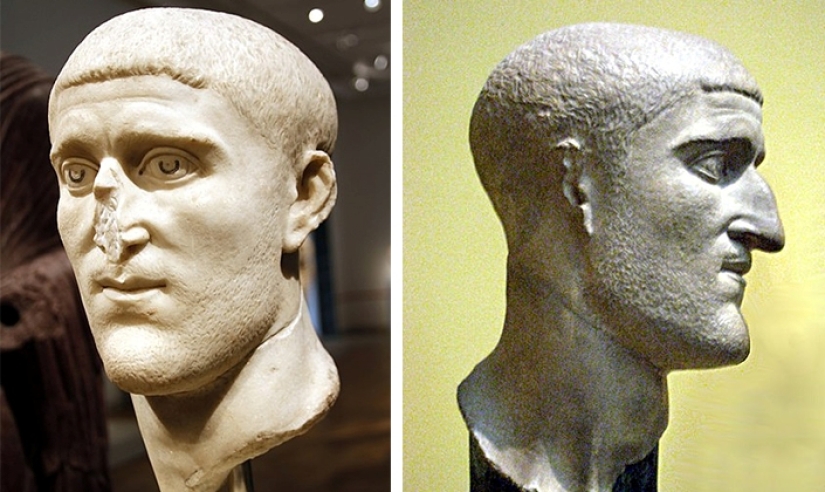
Constantius Chlorine. Antique original left without a nose, and on the right a cast of nameless restored craftsman sculpture
This liberal attitude towards the noses led to the fact that the disposal of art lovers turned out to be a huge number of priceless works, devoid of noses and other body parts. Still some two hundred years ago, few people wanted to possess a classical statue of Zeus or Caesar without a nose and to restore damaged parts hired skilled craftsmen.
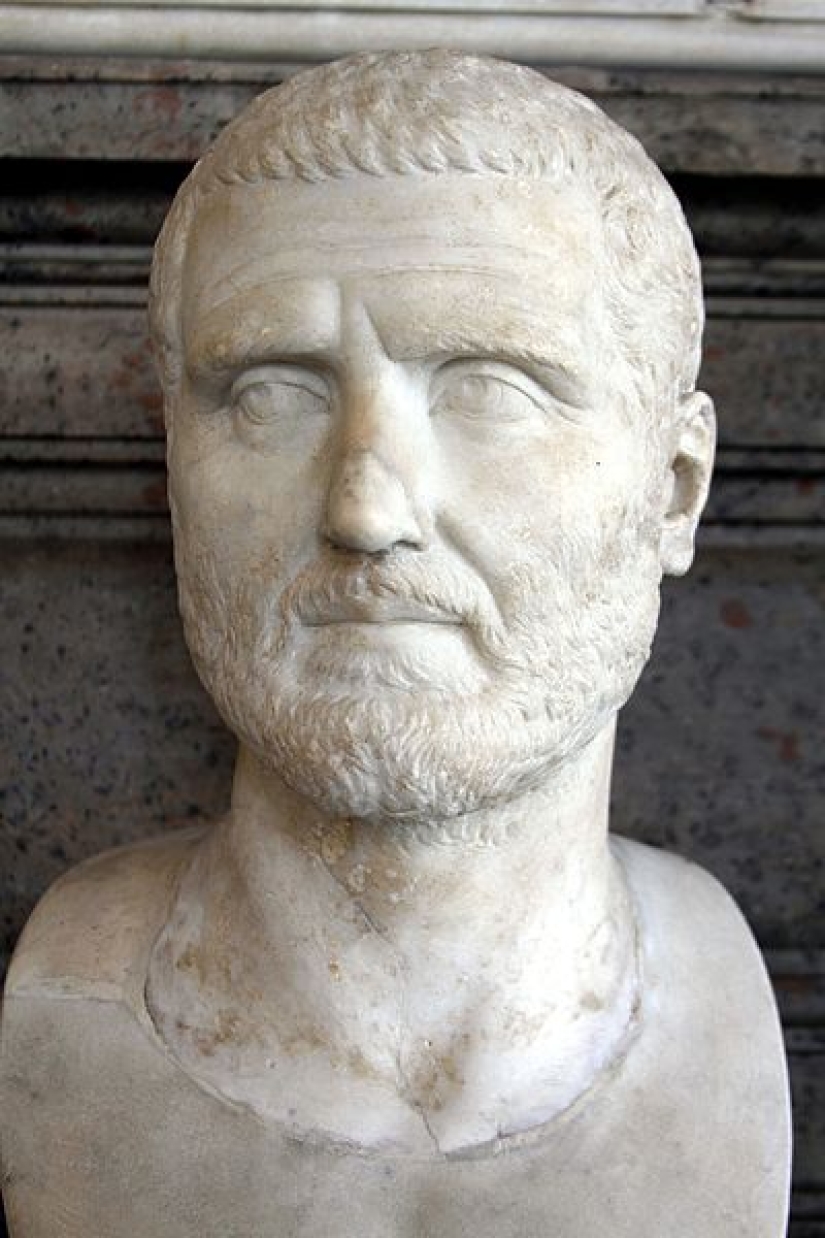
The Emperor Gordian. See "oversight of" the nose and added by the restorers shoulders
Noses, hands, feet and even heads were sculpted and glued to the originals in a truly industrial scale. Did not return the statues only lost penises — they were rather euphemistically to replace the Fig leaves.
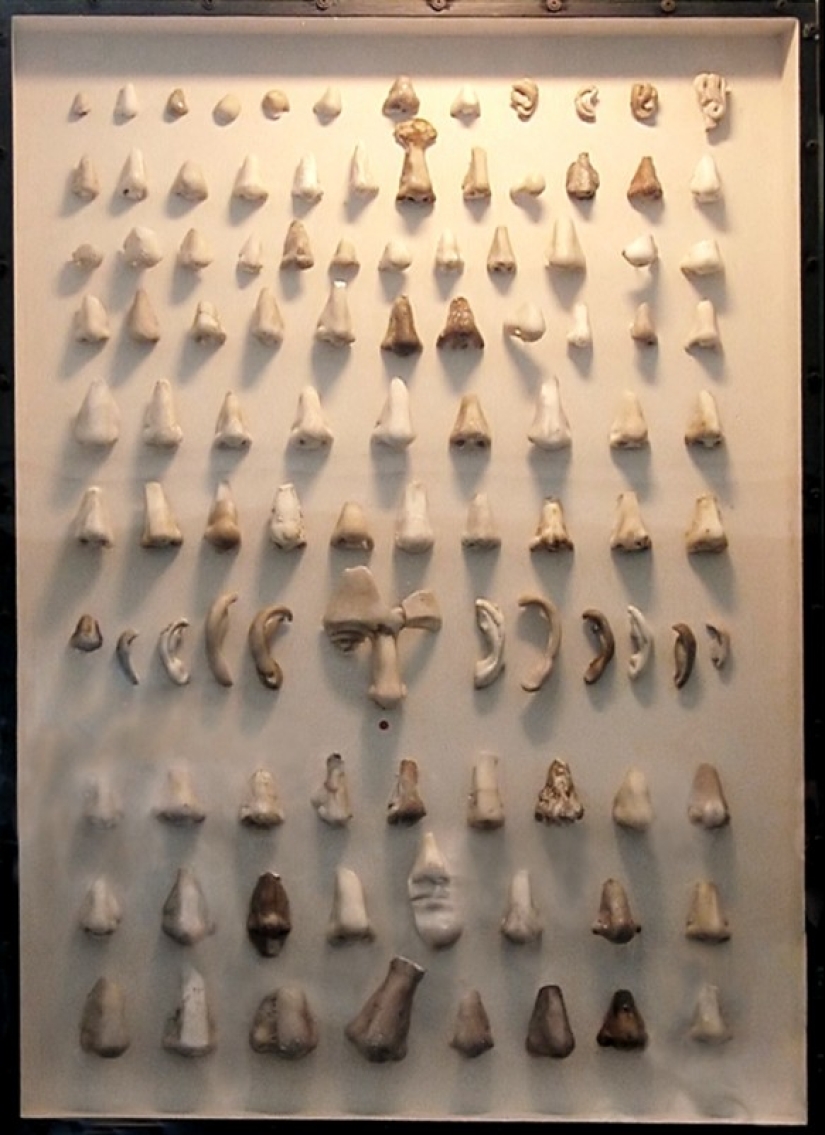
With time, the Museum has accumulated an impressive collection of noses and ears from various masterpieces and someone had the idea to create an unusual, is not unparalleled in any Museum in the world stand. In 1981 "Nootka" the Glyptothek, was exhibited in one of the halls of the Museum and, unexpectedly, turned out to be popular among visitors.
Did you know that the ancient statues were not only noses, but also painted in bright colors?
Keywords: Antiquity | Ancient world | Egypt | Emperor | Art | Sculpture
Post News ArticleRecent articles

It's high time to admit that this whole hipster idea has gone too far. The concept has become so popular that even restaurants have ...

There is a perception that people only use 10% of their brain potential. But the heroes of our review, apparently, found a way to ...
Related articles

In November 69 BC, she was born Cleopatra, the last Queen of Egypt from the Macedonian dynasty of the Ptolemies. Cleopatra, perhaps ...

Colin and Kristin Poole are an amazing creative family. Colin is a world-renowned artist, and his wife Kristin is a wonderful ...

After centuries of tradition and fashion are changing. Once our ancestors in order doing that now would be shot down us off. About ...
New Year's is a time to surprise and delight loved ones not only with gifts but also with a unique presentation of the holiday ...