
5 mosquito life stages: from egg to hibernation
Life would be perfect if not for the small bloodsuckers. We Wake up at night from their annoying squeak, put them off on an evening walk. Their bites are annoying unpleasant itching, are carriers of dangerous diseases. In General, in its short life, they are great to annoy mankind.
 For a more effective fight against the pesky bloodsuckers will not be superfluous to learn more about them. It is noteworthy that the life expectancy of a mosquito depends on its gender. The most dangerous are female. They're "out hunting" with the evening coolness and tirelessly foraged till dawn. The life of the mosquito fits into the five stages.
Eggs
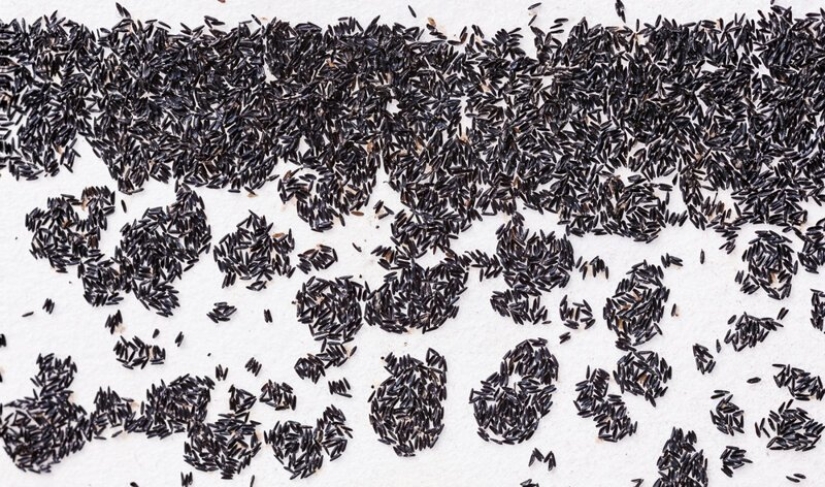
Each female mosquito lays two or three hundred eggs. She attaches them to the underside of grass and leaves of aquatic plants. Insect covers the eggs are adhesive shell.
Larvae
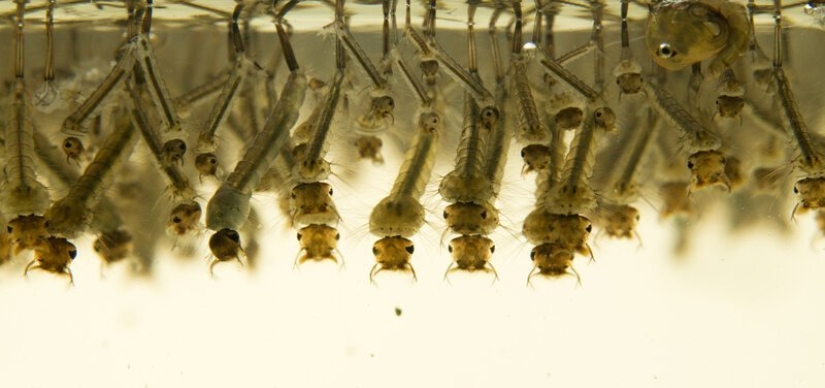
Eggs ripen for three days. As maturity they burst, freeing the path to the small larvae. At first glance, future mosquitoes look like tadpoles.
The larva falls into the water, turning the surface of the respiratory tube. They are so small that are almost invisible to the naked eye. When viewed under a microscope, it is possible to detect the eyes and antennae. The latter is necessary to nourish the larva. It flows through the antennae river water, producing the smallest particles.
Doll
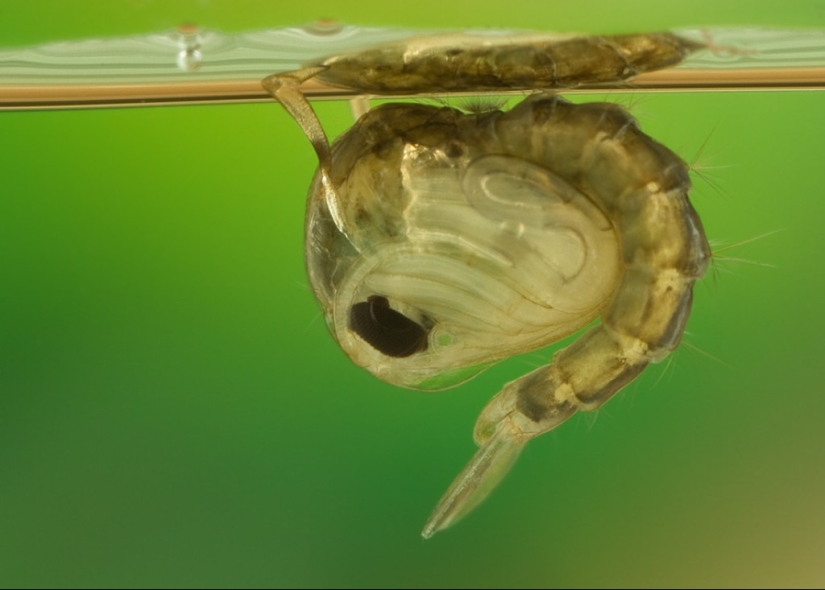
Being at the very bottom of the food chain, not all larvae survive to the third period of development. But the most fortunate three weeks later, the active power is ready to pupate. Then the larva becomes covered by a rigid capsule, loses a breathing tube and going through several important transformations. Periodically, the capsule rises to the surface of the water to the newly formed pupa is saturated with oxygen.
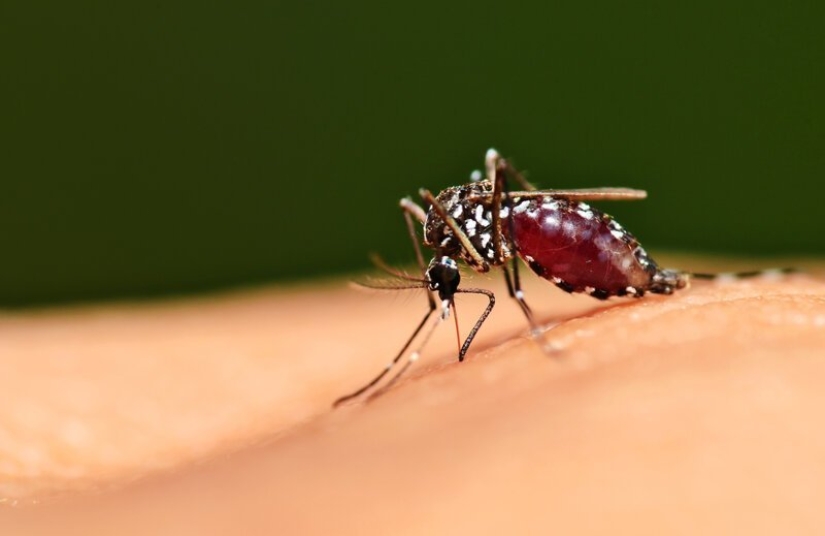
During one of the breathing rises the hard shell breaks, releasing a full mosquito with a proboscis, wings and other parts of the body. Males, unlike females, vegetarians. They do not fly away from the ponds, feeding on plant SAP. Females feed on blood, because active hunting on warm-blooded animals, including humans.
Little leech breaks the skin of the victim's proboscis. She needs to hunt to provide maturation of the future of masonry. By the way, the female attracts the male characteristic sound of flight, which we hear a nasty squeak. After saturation and maturation of the eggs the insect returns to the pond to continue mosquito genus.
Winter and death
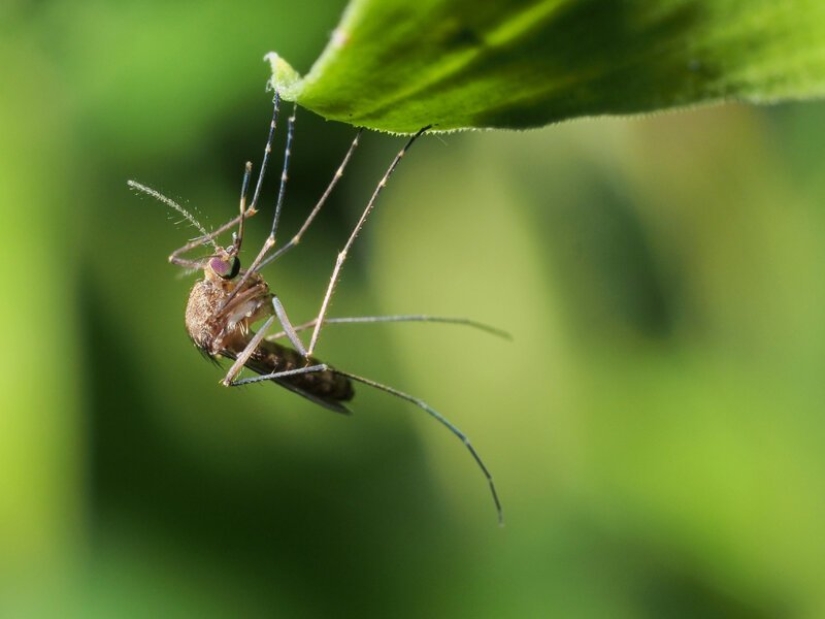
The male mosquitoes live for one summer, dying with the first frost. The female need to take care of winter hibernation, because the eggs will Mature only in the spring. Finding the right slit, it goes into hibernation.
With the first heat, the female mosquito wakes up. Starve all winter, she immediately goes on the hunt. After drinking blood, komariha looking for a suitable blade of grass or a leaf above the water to lay their clutch of two or three hundred eggs. Ensuring the continuation of the species, the insect dies. And after three days from eggs the larvae of a mosquito and the cycle of life continues.
Keywords: Life | Mosquitoes | Blood | Insects
Post News ArticleRecent articles

It's high time to admit that this whole hipster idea has gone too far. The concept has become so popular that even restaurants have ...

There is a perception that people only use 10% of their brain potential. But the heroes of our review, apparently, found a way to ...
Related articles

Being caught in the so-called "molly's houses" was not just dangerous — in the XVIII century it could easily lead a man to the ...

No that does not happen the new year? Of course, no snow. The snow transforms any landscape into a fairy, and after a snowfall it's ...

It is not 100% to say that tomorrow is with us nothing bad will happen, because often life throws up surprises when least expected. ...
New Year's is a time to surprise and delight loved ones not only with gifts but also with a unique presentation of the holiday ...